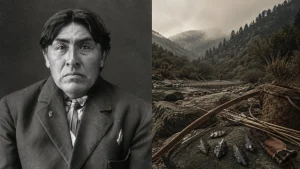
The Texas Canyon Battle Where U.S. Cavalry Captured 1,400 Native Horses — Then Destroyed About 1,000 Of Them
When the families arrived at the agencies at Fort Sill and Fort Reno through the winter and spring of 1874-1875, they were entering a system that was intended to fundamentally transform them.
The Indian agency system of the 1870s was operated by the Bureau of Indian Affairs under a “Peace Policy” — a set of ideas about how the reservation period would work that was derived from Protestant missionary beliefs about civilization, Christianity, and the proper organization of human life.
The Peace Policy assumed that the transition from the “savage” life of the Plains to the “civilized” life of the reservation was necessary and beneficial — that the reservation period would teach the formerly nomadic peoples to farm, to raise livestock, to attend school, to practice Christianity, and to organize family life on the model of the American nuclear family rather than the extended kinship networks of Plains society.
This assumption was both paternalistic and incorrect.