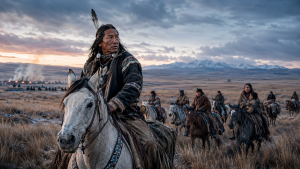
The U.S. Government Offered The Sioux More Than $1 Billion For The Black Hills – They Refused To Take The Money
The scale and entrenchment of that development is part of why any realistic resolution of the Black Hills dispute cannot involve simple return of the full territory: the Hills as they are today are not the Hills as they were in 1877, and the people who now live and work and recreate in the area have their own relationships to the land that any political process would have to account for.
The proposals that have come closest to gaining traction — the Bradley Bill approach of transferring federal land only — have tried to navigate this reality by focusing on what the government actually holds and can transfer without displacing private landowners or residents.
The federal land in the Black Hills region — national forest, national grassland, Wind Cave National Park — represents a significant portion of the total area and would constitute a meaningful, if partial, restoration.
That this approach has failed, despite being the most politically pragmatic version of the claim, indicates the depth of the political obstacle.
Returning even the federal portion of the Black Hills to Sioux sovereignty has not been achievable through the legislative process.
The Ironies That The Story Contains