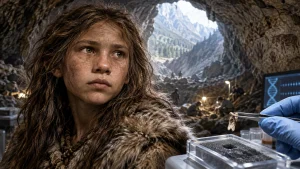
The Young Woman Found In An Idaho Gravel Quarry — And The 12,500-Year-Old Burial That Complicated The Clovis Story
By the time the Jazwa et al.
2021 paper raised the dating concerns explicitly, it had been thirty years since the burial was reinterred.
The bones that had been available for sampling in 1989-1991 were no longer accessible.
No additional samples could be taken.
But suppose a new dating question arose today — a question that could not have been formulated in 1991.
Modern radiocarbon pretreatment methods include ultrafiltration of the collagen, which removes degraded collagen fractions that can carry contaminant carbon.
Running a new date on the Buhl bones with modern ultrafiltration methods would produce a result that might be more reliable than the 1991 date.