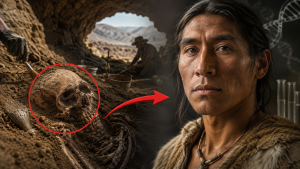
The Young Woman Found In An Idaho Gravel Quarry — And The 12,500-Year-Old Burial That Complicated The Clovis Story
The fact that it is unavailable is a consequence of the legitimate and lawful exercise of Indigenous sovereignty over ancestral remains — a consequence that reflects a set of values and obligations that the scientific community is right to respect, even when the scientific cost is significant.
The Repatriation That Divided Opinion
The repatriation of the Buhl burial happened through Idaho state law rather than the federal Native American Graves Protection and Repatriation Act — NAGPRA — which was signed into law in November 1990 but which had a complex implementation timeline and whose coverage of this specific burial was subject to legal interpretation.
The Idaho state process directed that Native American skeletal remains found within the state be returned to the nearest federally recognized tribe — in this case, the Shoshone-Bannock Tribes at Fort Hall.
The skeleton and associated artifacts were turned over to tribal authorities and reburied in December 1991, slightly less than three years after the initial discovery.