
Mexico Stands Firm: Claudia Sheinbaum Challenges U.S. Military Action in Venezuela
Behind the headlines of a dramatic U.S. military operation in Venezuela lies a quieter but consequential story: Mexico’s president has taken an unusually firm stand against Washington. Claudia Sheinbaum’s response is more than political rhetoric—it is a calculated, legally grounded challenge that could reshape how hemispheric powers navigate intervention, sovereignty, and international norms.
A Principled Critique
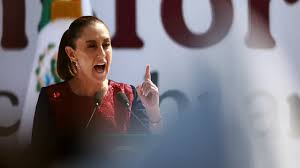
Following the surprising U.S. operation in Venezuela and the capture of President Nicolás Maduro, Sheinbaum delivered one of the strongest Latin American critiques of U.S. foreign policy in decades. Her response went beyond words, rooting itself in international law, Mexico’s constitutional principles, and diplomatic doctrine.
Mexico’s government condemned the U.S. action as a unilateral violation of the United Nations Charter, citing Article 2(4), which prohibits threats or use of force against another state’s sovereignty. By framing the discussion in legal terms, Sheinbaum elevated the debate from bilateral disagreement to a matter of global norms.
Sheinbaum emphasized that Latin America and the Caribbean have long been designated a “zone of peace,” a principle reaffirmed by Mexican diplomacy to prevent foreign military interventions. She argued that unilateral military actions threaten sovereignty, self-determination, and regional stability.
Legal and Historical Foundations
Sheinbaum invoked Mexico’s Estrada Doctrine, emphasizing non-intervention, respect for sovereign equality, and avoidance of judgments on other nations’ internal affairs. She reinforced her argument with historical memory, reminding audiences of coups, covert interference, and externally imposed regimes that have left deep scars across Latin America.
Abrupt foreign interventions, she noted, often worsen instability, create humanitarian crises, and trigger refugee flows. By highlighting these risks, Sheinbaum framed her critique as both morally and strategically grounded.
Multilateral Diplomacy and Regional Response
Sheinbaum called on the United Nations and the Organization of American States (OAS) to mediate peacefully, enforce international norms, and prevent unilateral actions from destabilizing the hemisphere. Her stance implicitly challenges power politics in the Americas, promoting legitimacy through law and consensus rather than force.
Her response resonated regionally. Brazil, Argentina, and several Caribbean nations voiced concern over the U.S. operation, framing it as a potential destabilizer for the region. Domestically, Sheinbaum’s principled approach reinforced Mexico’s international identity, balancing moral authority with continued cooperation with the U.S. on trade, security, and migration.
A Broader Message
Beyond condemning a single operation, Sheinbaum emphasized Venezuelan self-determination, rejecting the idea that military capture can replace political legitimacy. Her critique highlights a broader struggle over hemispheric order: unilateral power versus rule-based diplomacy.
Through legal rigor, historical awareness, and proactive engagement, Sheinbaum presents a vision for Latin American leadership that prioritizes dialogue, sovereignty, and ethical governance over military might.
Conclusion
Claudia Sheinbaum’s response to the U.S. operation in Venezuela marks a defining moment in Latin American diplomacy. By combining legal principles, historical memory, and calls for multilateral engagement, she reframed the crisis as a test of international norms, sovereignty, and ethical leadership. Mexico’s stance demonstrates that regional stability and legitimate power are maintained not through force, but through law, diplomacy, and principled engagement—a potential blueprint for the hemisphere in high-stakes conflicts.