
Trump’s Proposed $2,000 Tariff Dividend Faces Legal and Legislative Hurdles
Late one evening, an anonymous government source claimed to have seen internal projections suggesting that the $2,000 dividend could be delayed indefinitely. Draft memos reportedly hinted that certain groups might be prioritized over others, contradicting the public message of universal middle- and lower-income eligibility. Analysts began questioning whether the promised payments could ever materialize as originally outlined.

The Proposal
The discussion began on November 9, when President Trump announced on Truth Social that Americans—excluding high-income earners—would be eligible for a $2,000 “dividend” funded through tariff revenue. Trump argued that strong markets, low inflation, and rising tariff collections made the plan feasible.
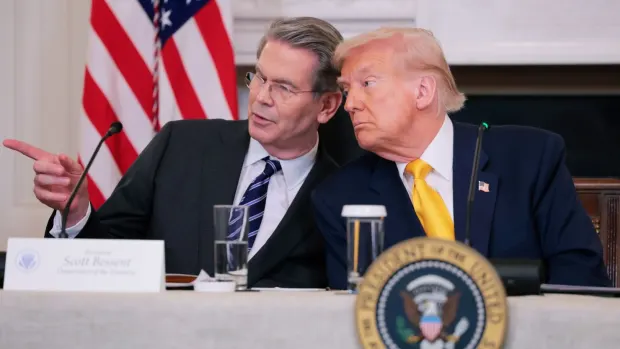
A week later, on November 16, Treasury Secretary Scott Bessent appeared on Fox News’ Sunday Morning Futures, confirming the administration’s intent to direct the payments toward “working families.” He emphasized, however, that Congress must authorize the expenditure before any checks, rebates, or tax credits can be issued.
“These payments could go out,” Bessent said, “but only with congressional approval.”
He added that lawmakers would also need to determine the payout structure and establish eligibility criteria.
This is not the first time Trump has suggested a rebate tied to tariff revenue. Earlier this year, he indicated that while open to the idea, he prioritized reducing the national debt and mentioned potential savings through the Department of Government Efficiency (DOGE), which has reported hundreds of billions in spending cuts.

Funding Concerns
Nonpartisan estimates from the Committee for a Responsible Federal Budget suggest that a rebate modeled on COVID-era stimulus could cost up to $600 billion—far exceeding the roughly $100 billion collected in tariffs through October.
Further complicating matters, the Supreme Court is reviewing the constitutionality of Trump’s tariff structure, with arguments heard on November 5. If struck down, the government could owe billions in refunds to businesses and individuals.
Administration Pushes Ahead
Despite these challenges, Trump has actively promoted the proposal. In a November 9 post, he highlighted rising 401(k)s, record-high markets, low inflation, and incoming tariff revenue, promising that all non-high-income households would receive “at least $2,000.”
During Oval Office remarks on November 10, he reiterated:
“We plan to deliver roughly $2,000 in dividends to middle- and lower-income families, with the remaining revenue going toward reducing the national debt.”
White House Press Secretary Karoline Leavitt later affirmed that officials were exploring “every legal option” to implement the payments.
Bessent also suggested that initial benefits may not take the form of physical checks. Early measures could include tax reductions—eliminating taxes on tips, overtime, Social Security income, and auto loan deductions—before moving to direct payments.
Additional proposals include:
Larger tax refunds expected in early 2026
A $1,000 “birth investment account” for children born that year, with applications opening in July
Eligibility and Congressional Oversight
Eligibility remains undefined. Trump has not clarified what counts as “high income,” and no formal thresholds exist. Analysts using CARES-Act–style models suggest individuals earning up to $75,000 and couples up to $150,000 could qualify, similar to the 2020 stimulus approach.
Congress remains the gatekeeper. No legislation has been introduced for Trump’s $2,000 tariff payments, although Senator Josh Hawley proposed a smaller $600-per-person rebate in July.
Meanwhile, the DOGE program is far from reaching its $2 trillion savings target, reporting only $214 billion as of November 17—a small fraction of the intended amount.
Bottom Line
Americans will not receive tariff-based rebates until Congress acts, the Supreme Court rules, and financing is fully resolved. While the administration emphasizes economic strength and potential benefits, no timeline exists for when payments may reach taxpayers.
Conclusion
Trump’s proposed $2,000 tariff dividend remains highly uncertain. Legal challenges, congressional approval, and funding limitations create significant obstacles. While the plan highlights potential economic benefits, Americans should understand that any payments are unlikely until multiple political and legal hurdles are cleared.