
Footage Sparks Controversy in Minneapolis Shooting of Renee Nicole Good
The moment the video surfaced, the conversation shifted — though not toward clarity. A grainy, close-up recording from the ICE agent’s phone quickly became the center of a national debate, with federal officials insisting it justifies a deadly shooting,
while local leaders and community members interpret it very differently. Rather than settling questions, the footage has amplified uncertainty: whose account will prevail, and what does the video truly reveal?
The recording, roughly 40 seconds long, shows Renee Good seated in her SUV as the agent approaches. In the clip, Good’s calm voice can be heard saying, “That’s fine, dude. I’m not mad at you,” moments before the vehicle moves and gunfire erupts. Expletives are audible as the SUV continues forward. Vice President JD Vance publicly shared the video, arguing it demonstrates the officer’s life was in danger and that the shooting was defensive. DHS officials confirmed the clip’s authenticity and maintained it supports their account.
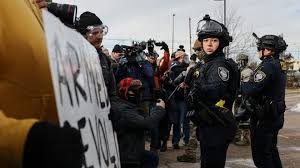
Yet the release has done little to unify interpretations. Minnesota authorities and local leaders, including Minneapolis Mayor Jacob Frey, have called for full transparency and broader access to all evidence. Critics argue the video’s selective release deepens the divide between federal narratives and community perception, raising questions about motive and timing.
The context of the incident remains fiercely contested. Federal officials frame Good’s actions as turning her vehicle into a lethal threat, while eyewitnesses and other recordings challenge that characterization, leaving unresolved questions about the immediacy and scale of danger. The case has sparked protests, legal debate, and renewed scrutiny of federal immigration enforcement methods in residential areas.
Legal analysts emphasize that even video evidence cannot fully settle the issue. Questions remain about whether deadly force was justified, whether proper investigative procedures were followed, and what role state authorities should have played given their limited access to key information.
Conclusion
The ICE agent’s cellphone footage has not ended the controversy surrounding Renee Good’s death — it has intensified it. While federal officials assert the video confirms self-defense, local leaders and critics see ambiguity demanding deeper scrutiny. As protests continue and investigations unfold, the case highlights how visual evidence, rather than simplifying complex events, can amplify public debate, especially in incidents involving lethal force and contested narratives.