
Tensions in the waters off South America have been rising for months, long before the latest strike.
Reports of unidentified boats slipping through covert trafficking lanes and sudden bursts of intelligence activity pushed U.S. forces into a heightened state of alert.
As American operations expanded near Venezuelan and Colombian maritime zones, internal concerns grew: who else was operating in those waters, and what risks would come with escalating military actions on the high seas?
The U.S. military has now conducted its 21st strike on what it says was a drug-smuggling vessel, killing three men aboard. The deaths bring the total number of casualties from the administration’s stepped-up anti-drug campaign to 83.
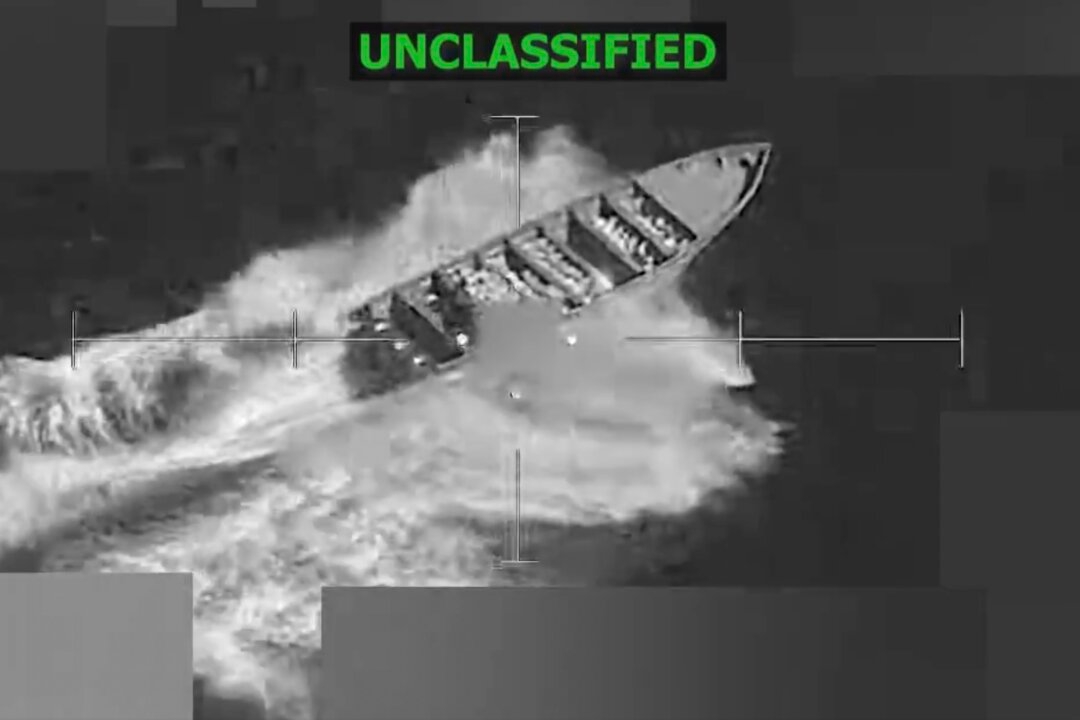
According to U.S. Southern Command, “On Nov. 15, under the direction of Secretary of War Pete Hegseth, Joint Task Force Southern Spear executed a lethal strike on a vessel operated by a Designated Terrorist Organization. Intelligence confirmed the vessel was involved in narcotics smuggling along a known trafficking route and was carrying illicit drugs.”
Unclassified footage released afterward showed a medium-sized motorized craft traveling through the eastern Pacific in international waters moments before it was hit. All three individuals — described by the military as “male narco-terrorists” — were killed in the strike.
The operation is the fifth in November alone and the 21st since the administration intensified its maritime drug-interdiction campaign.
Operations Expanding Near Venezuela
The U.S. has increasingly targeted suspected traffickers near Venezuelan waters, eventually extending its operations into the Pacific approaches near Colombia. American officials accuse Venezuelan President Nicolás Maduro of overseeing a multinational cocaine-smuggling network and leaning on cartel groups to strengthen his political grip.
In late October, Secretary Hegseth ordered an aircraft carrier strike group to move into the Southern Command region, which encompasses the Caribbean, South America, and surrounding seas. By Nov. 11, the USS Gerald R. Ford — a nuclear-powered carrier equipped with F/A-18 Super Hornets and Tomahawk missiles — had arrived on station.
A day later, President Trump suggested his administration was close to finalizing its stance toward the Maduro government, hinting that additional military measures in the Caribbean could be imminent.
War Powers and Legal Tensions
The growing tempo of strikes has sparked fierce debate over whether the administration has the legal authority to conduct lethal military operations in international waters for drug interdiction purposes. Critics argue that narcotics enforcement traditionally falls under civilian law-enforcement agencies, not the armed forces, and that these actions risk exceeding the president’s authority under both U.S. and international law.
Lawmakers including Sen. Rand Paul and Rep. Thomas Massie have condemned the strikes as “extrajudicial killings” and “summary executions,” insisting that Congress should be required to authorize such force. The Department of Justice, however, maintains that U.S. military personnel participating in the operations are shielded from prosecution.
Conclusion
The 21st strike on a suspected trafficking vessel highlights the administration’s increasingly aggressive strategy for combating overseas drug networks. While military commanders describe the operations as lawful counterterrorism measures, they raise complicated questions about executive power, the boundaries of international law, and how — or whether — the military should be used in drug enforcement efforts. With more operations expected, debates over oversight and legality are unlikely to subside.