
A Show of Force or a Test of Limits? Minnesota Becomes Ground Zero for Federal Power
The operation was introduced as decisive and orderly — a firm assertion of federal authority wrapped in the language of immigration enforcement. But within days of federal agents expanding their presence across Minneapolis and St. Paul, the certainty of that narrative began to unravel. Clashes followed. Streets filled. Lives were lost. And what was framed as a routine enforcement surge quickly escalated into a national flashpoint.
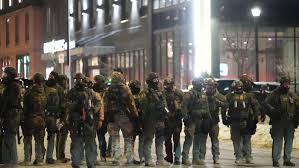
As images and firsthand accounts spread online, the official storyline struggled to keep pace. Protests erupted across the Twin Cities, fueled by reports of aggressive tactics and fatal encounters involving federal agents. For many residents, the question shifted from why now to what exactly is this meant to accomplish.
Into that volatility stepped Tom Homan, a longtime immigration hardliner dispatched by President Donald Trump to oversee the situation. To the administration, Homan represents control — a steady hand sent to reassert “law and order” amid growing unrest. To critics, his arrival signals escalation rather than resolution, reinforcing fears that the federal government is less interested in enforcement than in asserting dominance over resistant communities.
Demonstrations have continued despite freezing temperatures and heightened police presence. Vigils, marches, and organized resistance efforts point to a deep well of public anger — not just over immigration policy, but over the use of force itself. Protesters argue that the tactics deployed blur the line between law enforcement and political intimidation, especially when heavily armed federal agents confront civilians in residential neighborhoods.
Federal officials maintain that all actions taken were lawful and necessary, citing officer safety and volatile conditions.
Yet video footage, eyewitness testimony, and conflicting timelines have prompted renewed scrutiny. Calls for independent investigations have grown louder, with civil rights advocates questioning whether accountability mechanisms are sufficient when federal agencies investigate themselves.
State and local leaders have openly challenged Washington’s approach. Minnesota officials have demanded transparency, condemned the lack of coordination with local authorities, and raised alarms about federal overreach. The standoff has evolved into more than a policy disagreement — it is now a constitutional and moral clash over who holds power, who answers for violence, and whose version of events the public is expected to accept.
Conclusion
What unfolded in Minnesota no longer fits neatly into the category of immigration enforcement. It has become a referendum on federal authority, the use of force, and the fragile trust between government and governed. With protests ongoing, investigations looming, and political lines hardening, the outcome will reverberate far beyond state borders.
In moments like this, history is shaped not only by what happens on the ground, but by which story prevails — the one written in official statements, the one captured on phones in the streets, or the one ultimately tested in courts and public memory. Minnesota now sits at the center of that struggle, and the nation is watching which version of justice survives.