
The world seems to be holding its breath.
Across multiple regions, tensions are simmering, military postures are shifting, and diplomatic channels are stretched thin. Are these overlapping crises edging the planet toward a broader confrontation—or is this simply heightened anxiety amplified by perception and fear?
Europe: Russia and NATO’s Eastern Flank
For over two years, the war in Ukraine has dominated European security concerns. Russian forces continue limited territorial advances, while long-range drone strikes into Ukrainian territory increase uncertainty.

Repeated airspace violations near NATO borders—especially in Estonia, Poland, and Romania—have prompted firm responses, raising fears that even minor incidents could escalate. Nations along the alliance’s eastern flank are adjusting defense postures, revisiting treaties, and reinforcing natural barriers along the Baltic frontier.
Russia’s development of advanced missile systems, including hypersonic and nuclear-powered cruise missiles, remains closely monitored. While experts consider a full-scale NATO invasion unlikely, limited provocations could test alliance cohesion, emphasizing the need for diplomacy and clear communication.
Middle East: Fragile Ceasefires and Strategic Shifts
The Middle East remains volatile. Ceasefires and negotiations occasionally pause fighting, but tensions between Israel, Palestinian factions, and regional powers remain high.

The Israel-Iran dynamic is especially sensitive. Recent exchanges raised fears of escalation, though both sides ultimately pulled back.
Iran’s nuclear program continues to require close scrutiny, while shifting regional alliances and declining influence of some non-state actors force Tehran to reassess its strategies. For the U.S., the focus remains on stability without deepening entanglement.
Indo-Pacific: Taiwan and Strategic Balances
China-Taiwan-U.S. relations are among the most consequential in the coming decade. Beijing views Taiwan as part of its territory, opposing foreign involvement in its defense, while the U.S. continues arms sales and diplomatic support for Taiwan.
The People’s Liberation Army has conducted naval, air, and amphibious exercises near Taiwan, signaling military readiness while modernizing capabilities. Chinese activities in the South China Sea and near Australia, alongside nuclear arsenal growth, demonstrate a broader strategic posture. Analysts caution that miscalculations could arise even without a fixed timeline for conflict.
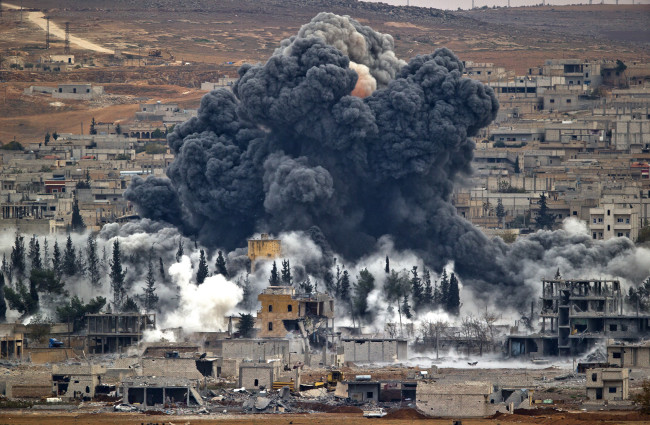
North Korea: Escalating Capabilities
North Korea continues to expand its missile and nuclear programs, including long-range ballistic and submarine-launched systems. Diplomatic efforts have stalled, while growing ties with Russia add complexity to the region.
Tensions along the Korean Peninsula remain high, with incidents near the demilitarized zone highlighting fragile stability. Pyongyang’s strategic decisions are closely tied to China and Russia, creating a highly interconnected regional environment.
Multiple Flashpoints, Not Inevitable Global War
Despite rising tensions, experts generally agree that a 20th-century–style global war remains unlikely. Economic interdependence, defense treaties, and international institutions serve as stabilizing forces.

However, the risk of miscalculation persists. Advanced military technologies, cyber capabilities, and rapid escalation cycles mean small incidents can have outsized consequences. Dialogue, transparency, and risk-reduction mechanisms are crucial to prevent unintended escalation.
Conclusion
The globe is navigating a complex web of geopolitical tensions. Europe, the Middle East, the Indo-Pacific, and the Korean Peninsula each present flashpoints requiring careful attention. While a full-scale global conflict is unlikely, the risks of miscalculation and accidental escalation are real.
Maintaining open communication, strengthening alliances, and prioritizing diplomacy are essential to preserving stability in an increasingly interconnected world.