
What if the person you admired online for years wasn’t who they appeared to be?
Sahar Tabar, the so-called “Zombie Angelina Jolie,” captivated millions on Instagram with an eerie, grotesque persona—sparking fascination, rumors, and outrage. But behind the viral photos lay a story of deception, danger, and harsh real-world consequences.
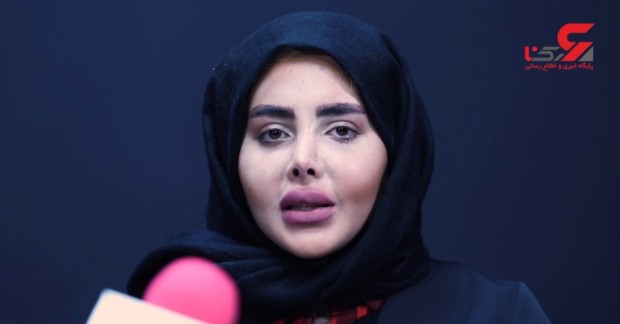
Tabar, whose real name is Fatemeh Khishvand, recently revealed her true appearance in an Iranian television interview following her release from jail.
Arrested in October 2019 on charges including blasphemy and insulting the hijab, the 21-year-old faced a 10-year prison sentence but served only 14 months, according to activist Masih Alinejad.
Her social media posts had drawn global attention. Edited images made her appear like a distorted, zombie-like version of Angelina Jolie, with exaggerated features such as a razor-sharp jawline, oversized lips, icy blue eyes, and pale skin. Thousands of followers marveled at the shocking images, but the truth was far less sinister.
During the interview, Khishvand admitted she never underwent plastic surgery to achieve her look. Instead, she relied on makeup and digital editing tools. “Everything you saw on Instagram was computer-enhanced,” she said. “I wanted fame from a young age, and cyberspace seemed like the easiest path. Acting would have been much harder.”
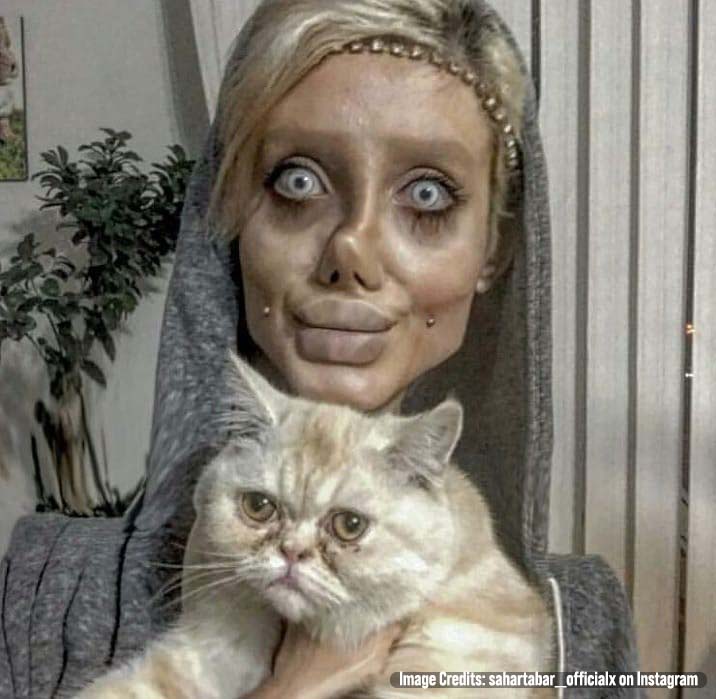
She acknowledged the warnings from her mother and expressed regret for the online persona that drew such intense attention. “Sometimes strangers’ words seem more important than those of your own parent,” she reflected. She also clarified that her “zombie” aesthetic wasn’t intentionally modeled after Jolie or fictional characters like the corpse bride.
While details about her time in prison remain limited, human rights groups have described Iranian incarceration conditions as harsh, with overcrowding, poor sanitation, and abuse. Khishvand’s experience highlights how online actions can collide with real-world consequences, particularly in countries with strict social and moral codes.
View this post on Instagram
Conclusion
Sahar Tabar’s story is a cautionary tale about the power—and dangers—of social media. What began as a quest for online fame led to viral notoriety, legal trouble, and personal reflection. By revealing her true face, Khishvand reminds the world that viral personas can mask reality—and that behind every extreme online image is a human story with real consequences.