
On the Brink? The Global Hotspots Testing World Stability
The world feels more precarious than it has in decades. Military exercises, drone strikes, and territorial disputes dominate headlines, while alliances are quietly tested behind the scenes. Are these simmering crises merely tension points, or could one misstep ignite a broader conflict?
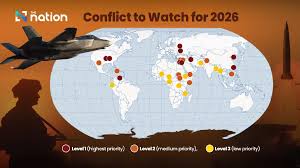
Europe and Russia: NATO’s Eastern Edge
For over two years, the Russia-Ukraine conflict has remained a central concern in European security. Despite sporadic diplomatic gestures, progress toward lasting peace has been limited. Russian forces continue small-scale operations in contested areas, and drone strikes have become a recurring challenge for Ukrainian defenses.
Incursions into airspace near NATO borders—particularly over Estonia, Poland, and Romania—have triggered firm responses from alliance officials. While these encounters have not escalated into open conflict, they serve as reminders of how quickly miscalculations can occur in high-tension environments. Countries along NATO’s eastern flank, including Estonia, Latvia, Lithuania, Poland, and Finland, are reexamining their defense strategies, fortifying natural barriers, and updating long-term security planning.
Meanwhile, Russia’s advanced weapons programs, from hypersonic missiles to nuclear-powered cruise technology, remain closely monitored by Western intelligence. Though most details are classified, these developments could extend Russia’s strategic reach and complicate crisis management. Analysts argue that large-scale invasions are unlikely, but smaller provocations or misinterpreted maneuvers remain the most probable risks. Coordination, clear communication, and diplomacy continue to be the strongest safeguards.
The Middle East: Fragile Equilibrium
In the Middle East, temporary ceasefires and ongoing negotiations have mitigated violence in some areas, but underlying tensions persist—particularly between Israel, Palestinian factions, and regional powers. U.S.-led diplomacy continues, though long-term solutions remain elusive.
Israel’s relations with Iran are a particularly volatile axis. Recent skirmishes have underscored how quickly exchanges can escalate, though both sides have de-escalated for now. Iran’s nuclear ambitions, combined with shifting alliances among non-state actors, create a fluid regional balance. For the United States and other global stakeholders, the priority is preventing localized conflicts from drawing in multiple powers, emphasizing restraint and strategic engagement over military escalation.
China and the Indo-Pacific: Taiwan and Regional Stakes
Across the Indo-Pacific, the situation around Taiwan remains a focal point of global concern. China’s military drills, growing strategic partnerships, and regional positioning are closely observed by neighboring nations and international monitors. Taiwan’s defense, supported indirectly by allies such as the United States, Japan, and India, underscores the complex network of interests at play. While direct confrontation is not inevitable, any misjudgment could have wide-reaching consequences for trade, security, and regional stability.
Conclusion
Across Europe, the Middle East, and the Indo-Pacific, multiple flashpoints remind us how fragile global stability can be. While the risk of all-out war remains low, the interconnectedness of these tensions demands vigilance, clear communication, and sustained diplomacy. In a world walking a tightrope between confrontation and compromise, the smallest misstep could reverberate far beyond its origin—and the stakes have never been higher.