
We tend to judge people by what’s easiest to see: confident introductions, smooth conversations, good manners on display.
But character rarely lives in grand gestures or well-practiced charm. It shows up quietly—in moments so small we often overlook them. The truth of who someone is usually appears not when they’re trying to impress, but when there’s nothing to gain.
First impressions can be persuasive. Courtesy, intelligence, and warmth can all be genuine—or carefully curated. What truly matters is how someone behaves when the situation offers no reward, no audience, and no advantage.
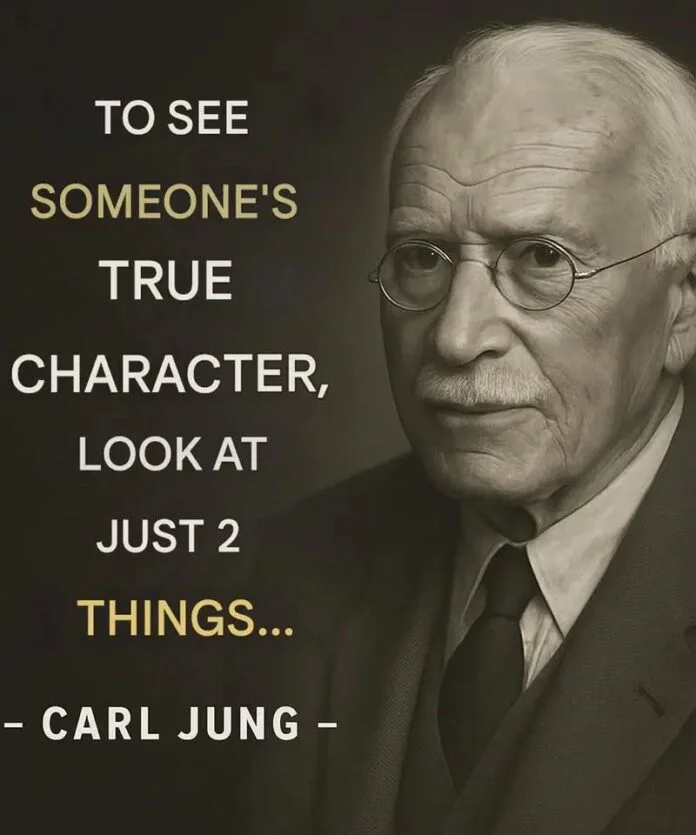
Psychologist Carl Jung believed that the core of a person is revealed when the mask slips—during ordinary moments when self-control relaxes. According to this idea, there are two situations that reveal character almost immediately.
How Someone Treats People Who Can’t Benefit Them
Watch how a person interacts with those who have no influence over their life: service workers, strangers, people in vulnerable positions. These encounters are powerful because they expose whether kindness is a value or a performance.
Respect that extends to everyone—regardless of status—is a sign of inner security. Impatience, dismissal, or quiet cruelty often points to entitlement or unresolved insecurity. Genuine decency doesn’t change depending on who’s watching.
This is wisdom many people learn with time: real respect isn’t selective. It doesn’t rise or fall with convenience.
How Someone Responds When Things Go Wrong
Delays, mistakes, and inconveniences are unavoidable. What matters is how someone reacts when control is lost. Do they become irritable over small disruptions? Do they blame others? Or do they pause, adapt, and move forward?
Emotional maturity isn’t loud. It appears in restraint, problem-solving, and humility. These reactions—often brief and unguarded—say far more than any carefully chosen words.
Other Quiet Signals Worth Noticing
Humor: Is it generous or cutting? Inclusive or dismissive?
How they speak about others: Constant criticism often reveals inner unrest.
Listening: Do they wait to understand, or only to respond?
Power: Authority reveals values quickly—whether it’s used to support or to dominate.
In a world shaped by curated images and social performance, these small, unscripted moments remain reliable indicators. Stress, anonymity, and inconvenience strip away pretense.
The Clarity That Comes With Time
Most people can look back and recognize when someone showed their true nature early on—through a single impatient remark, a quiet act of kindness, or a moment of grace under pressure. These instances tend to linger because they were honest.
Character is not built from declarations or reputation. It’s built from everyday choices: how someone treats others, how they handle discomfort, and how they behave when nothing is at stake.
Jung’s insight still holds: observe how people act toward those who offer nothing in return, and notice how they move through frustration. That’s where truth lives.
Conclusion
If you want to understand someone deeply—or reflect on your own character—look beyond appearances. Pay attention to reactions, not promises.
Notice kindness without witnesses and patience without reward. Character isn’t something people announce. It’s something they reveal, quietly, one moment at a time.