
For decades, the world has known Lynda Carter as the woman who seemed almost too perfect to be real — stunning, powerful, elegant, and unforgettable.
But behind the dazzling smile, the iconic costume, and the image millions admired from afar was a life far more complicated than most people ever realized.
Long before she became a television legend, and even after the spotlight faded, Lynda faced heartbreak, personal battles, painful loss, and difficult choices that never made it into the glamorous headlines.
And once you learn what she endured behind the scenes, it becomes clear that her greatest strength was never just playing Wonder Woman — it was surviving everything life threw at her when the cameras stopped rolling.

When many people hear the name Lynda Carter, one image instantly comes to mind: Wonder Woman. For an entire generation, she wasn’t just a television star — she was a symbol of strength, beauty, confidence, and female empowerment at a time when women in action roles were still incredibly rare.
For those who grew up in the 1970s, Lynda Carter was more than an actress playing a superhero. She became a childhood icon. Countless young girls wrapped towels around their shoulders like capes, borrowed tiaras, and imagined themselves saving the world just like Wonder Woman. She represented something powerful: a woman who was fearless, graceful, and impossible to ignore.

And while many admired her stunning looks, Lynda Carter’s legacy goes far deeper than beauty. Her rise to fame was not effortless, and before she became one of television’s most recognizable stars, she had to overcome insecurity, rejection, financial struggle, and the pressures of an industry that often underestimated women.
A Childhood Shaped by Talent and Insecurity
Lynda Carter was born in 1951 in Phoenix, Arizona, and even from a very young age, she showed signs of being comfortable in front of an audience. At just five years old, she made her first public television appearance on Lew King’s Talent Show, offering an early glimpse of the charisma that would later make her famous.
But while she clearly had natural presence, her early interests were not centered on acting. As she grew older, music became her true passion. In high school, she joined a band and started performing publicly. By the age of 15, she was already earning money by singing at a local pizza parlor, bringing in around $25 a weekend.
Despite her talent, Lynda’s youth was not without challenges. Her parents divorced when she was young, and she also struggled with self-confidence — particularly because of her height. Long before it became one of her most striking features, being tall made her feel different and self-conscious.
She later admitted that although she often laughed off comments about her height, internally she was deeply affected by them.
“I was a clown. Inside I felt like crumbling jelly,” she once said.
Even so, Lynda often spoke warmly about her upbringing. She described it as traditional, grounded, and deeply moral. Sundays were spent at church, family life was simple and structured, and her mother in particular worried about the idea of her daughter becoming part of the Hollywood world.
“It was so moral, so middle-class, so old-fashioned and so good,” she once reflected.
From College Student to Beauty Queen
After high school, Lynda briefly attended Arizona State University, where she was voted “Most Talented.” But despite being on a conventional path, she made a bold decision: she left college to fully pursue a career in music.
At the time, she believed singing would be her future. But life had other plans.

In 1972, a new opportunity unexpectedly changed her direction when she entered — and won — a local beauty pageant in Arizona. That victory led her to the Miss USA competition, which she also won, giving her national visibility and eventually a place in the Miss World pageant, where she finished in the Top 15.
Although the title helped open doors, Lynda later looked back on her pageant experience with mixed feelings. Rather than glamorizing it, she spoke honestly about how emotionally difficult it could be.
She described beauty competitions as having a kind of “built-in cruelty” and said the experience was not nearly as glamorous as people imagined. To her, the crown and sash didn’t define who she was — they were simply a stepping stone.
Breaking Into Hollywood the Hard Way
Determined to make a real career in entertainment, Lynda moved forward by studying acting in New York during the early 1970s. She took classes, sharpened her skills, and slowly began landing small television roles in shows like Starsky and Hutch and Cos.
But as with many aspiring performers, success did not come quickly.
View this post on Instagram
Hollywood was intensely competitive, and despite her striking appearance and natural screen presence, Lynda struggled to gain traction. Living in Los Angeles, she began running out of money and reached a point where she was close to giving up altogether.
Her savings were nearly gone, and she was preparing to step away from her dream and take a more “normal” job.
Then, just as she was on the verge of returning home to Arizona, everything changed.
The Role That Changed Her Life Forever

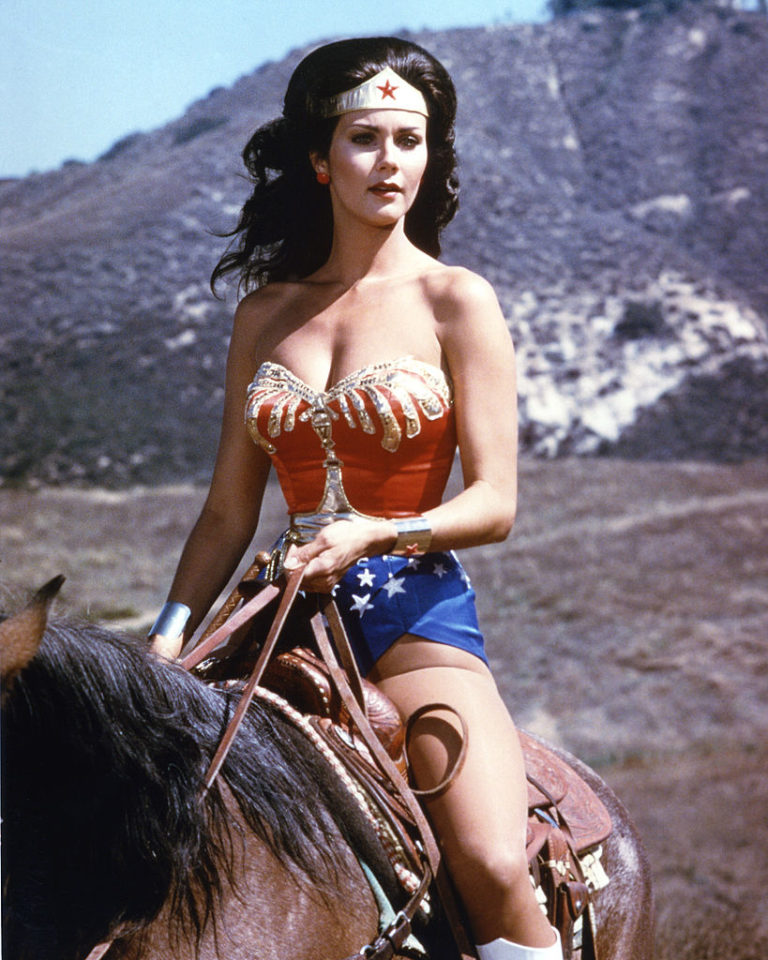
In 1975, Lynda Carter landed the role that would define her career: Diana Prince, also known as Wonder Woman.
The timing could not have been more dramatic. She reportedly had just $25 in her bank account when she found out she had been cast. She was on the edge of abandoning Hollywood when her manager called with the life-changing news.
At the time, the series was a major breakthrough. Based on the iconic DC Comics character first created in 1941, Wonder Woman was one of the earliest female superheroes in popular culture. And in the middle of the women’s liberation movement of the 1970s, a television series led by a powerful woman felt especially meaningful.
Lynda Carter turned out to be the perfect choice.
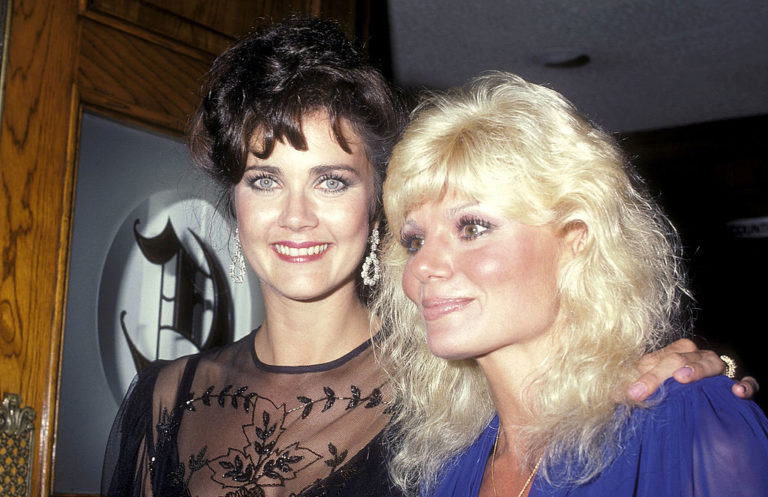
She had the elegance, athleticism, beauty, and confidence the role demanded — but more importantly, she brought humanity and dignity to the character. She didn’t just look like Wonder Woman. She made audiences believe in her.
Wonder Woman and the Power of Representation
For many viewers, especially women and girls, Wonder Woman represented something rarely seen on television at the time: a woman who was not waiting to be rescued, not existing merely as a romantic side character, and not limited by the expectations of men.
The series debuted at a moment when feminist ideas were becoming more visible in American culture. In fact, the early episodes of Wonder Woman openly embraced themes of female empowerment, equality, and strength.
One memorable line from the series captured that spirit perfectly:
“Any civilization that does not recognize the female is doomed to destruction.”
It was bold, especially for network television.
However, not everyone behind the scenes was comfortable with that message. According to Lynda, network executives worried that the show’s feminist themes might alienate viewers and be seen as “dangerous.”
Over time, some of the more direct messaging was softened or reduced — something she later admitted disappointed her.
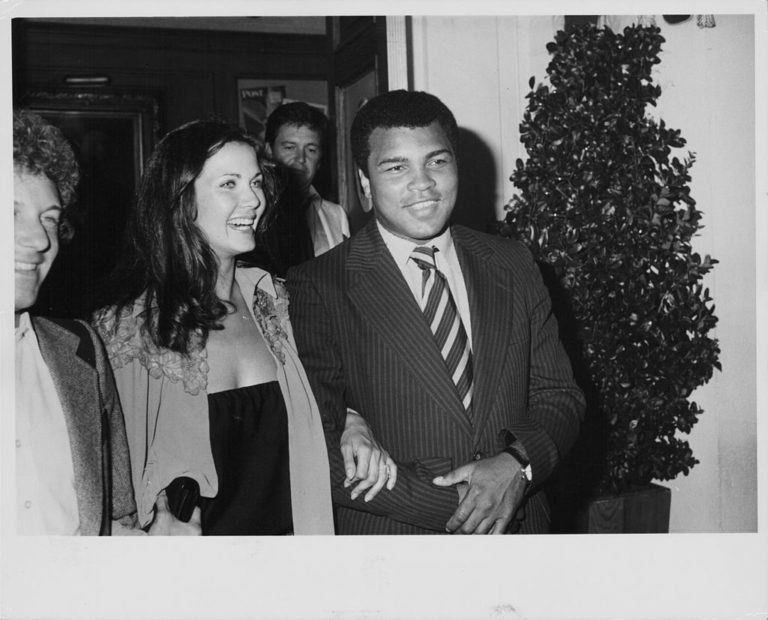
Still, the show’s impact remained undeniable.
Standing Her Ground Behind the Scenes
Although she became the face of one of television’s most powerful female characters, Lynda still had to fight for respect behind the scenes.
One of the clearest examples came when producers initially wanted to use a male stunt double for some of Wonder Woman’s more dangerous action scenes. The idea of using a female stunt performer apparently seemed unrealistic to them — even for a show centered around a female superhero.
Lynda strongly objected.
When the script called for Wonder Woman to hang from a flying helicopter, she chose to perform the stunt herself. After proving she could handle the physical demands of the role, the producers finally agreed to hire a female stunt double.
It was a small but important victory — one that reflected the broader struggle women often faced in the entertainment industry at the time.
Beauty, Fame, and the Burden of Being Seen
As Wonder Woman became a hit, Lynda Carter’s fame exploded. She quickly became one of the most recognizable women in the world.
In 1978, she was voted “The Most Beautiful Woman in the World,” and a now-famous poster of her in a tied crop top became the best-selling poster of the year.
To many, she was the ultimate fantasy figure of the era.
But while the public often celebrated her appearance, Lynda was candid about the discomfort that came with being objectified. She understood that admiration often crossed into something more invasive and unsettling.
She admitted that it was difficult knowing that images of her body were being displayed in ways she had never imagined or intended. Even the famous poster that sold over a million copies was something she later spoke about with visible discomfort.
In interviews, she made it clear that she wanted women to connect with Wonder Woman not because she was glamorous, but because she was strong, inspiring, and empowering.
“I want women to want to be me, or be my best friend,” she once explained.
That distinction mattered to her.
Life After Wonder Woman
When Wonder Woman ended in 1979 after three successful seasons, Lynda Carter had already secured her place in television history. But the end of the show was not the end of her career.
In fact, her success opened many new doors.
She met high-profile figures such as President Ronald Reagan, appeared on beloved programs like The Muppet Show, and even starred in her own musical television specials, reconnecting with her original love of music.
Financially, she was thriving as well. Reports at the time stated that she earned $1 million for 26 episodes of Wonder Woman, a major achievement that allowed her to live a glamorous Hollywood lifestyle. She reportedly lived in a luxurious French-style mansion in Benedict Canyon, complete with German Shepherd guard dogs and an impressive collection of Bentleys.
But Lynda didn’t simply rely on past fame.

She continued acting, taking on roles such as Carole Stanwyck in the crime drama Partners in Crime, where she starred opposite Loni Anderson. The role allowed her to remain visible on screen while proving she was more than just one iconic character.
A Career Built on Reinvention
Throughout the 1990s, Lynda Carter remained active in the entertainment world by evolving with it.
She founded her own production company, Potomac Productions, showing that she was not only a performer but also a businesswoman with creative control over her future. She also appeared in several television movies and expanded her career through voice-over work, continuing to find new ways to stay connected to audiences.
Unlike many stars who are forever trapped in the shadow of one role, Lynda Carter found ways to honor Wonder Woman while still building a broader identity.
And yet, no matter how many projects followed, the image of her as Wonder Woman remained timeless.

More Than a TV Star
What makes Lynda Carter unforgettable is not simply that she played a superhero. It is that she became one — at least in the eyes of those who watched her.
She represented confidence at a time when women were still being told to take up less space. She embodied glamour without losing strength. She fought against stereotypes while working inside an industry built on them.
And perhaps most importantly, she gave generations of girls permission to imagine themselves as powerful.
That kind of legacy lasts far longer than a television series.
Lynda Carter’s Life Beyond Wonder Woman: Love, Loss, Family, and Strength
As the new millennium began, Lynda Carter continued to expand her career, proving that her star power extended far beyond the role that made her famous. While older generations will always remember her as the original Wonder Woman, younger audiences may recognize her from later projects — including her role as Pauline in the 2005 film adaptation of The Dukes of Hazzard.
At the same time, she also embraced the stage, stepping into the world of theatre with a role in the West End production of Chicago in London.
It was yet another reminder that Lynda’s talents were never limited to television alone. Whether performing on screen, on stage, or in music, she continued to show the same elegance and confidence that first captivated audiences in the 1970s.
Still, no matter how many new roles she took on, Lynda Carter remained forever connected to the superhero character that changed her life. Over the years, she has maintained close ties to the Wonder Woman legacy and the broader world of DC Comics.
Her importance to that universe has never been forgotten. In fact, DC Comics officially honored her as one of the individuals who helped shape the cultural significance of the iconic heroine. Her influence has also remained so strong that, before filming began on the 2017 Wonder Woman movie, director Patty Jenkins personally reached out to her in hopes of arranging a cameo appearance.
Although fans would have loved to see her return in that way, Lynda was unable to accept the offer due to scheduling conflicts.
“At that time we couldn’t get our timing together,” she explained. “So, this next time, if she writes me a decent part, I might do it.”
That possibility alone was enough to excite longtime fans who still see her as the definitive Wonder Woman.
A Symbol of Female Empowerment
Lynda’s bond with the character has never simply been about nostalgia. It has also been about what Wonder Woman represents.
In 2016, she took part in a major celebration at the United Nations, marking the 75th anniversary of Wonder Woman’s first appearance. During the event, the beloved superhero was named the UN’s Honorary Ambassador for the Empowerment of Women and Girls.
For Lynda, the moment carried enormous emotional and symbolic significance.
“The greatest honor and responsibility of playing Wonder Woman was serving as a role model for fans around the world, particularly girls,” she said during the ceremony.
She also spoke about the deeper impact of the character, noting how a superhero can be both powerful and compassionate — inspiring women to believe in themselves while encouraging men to embrace equality.
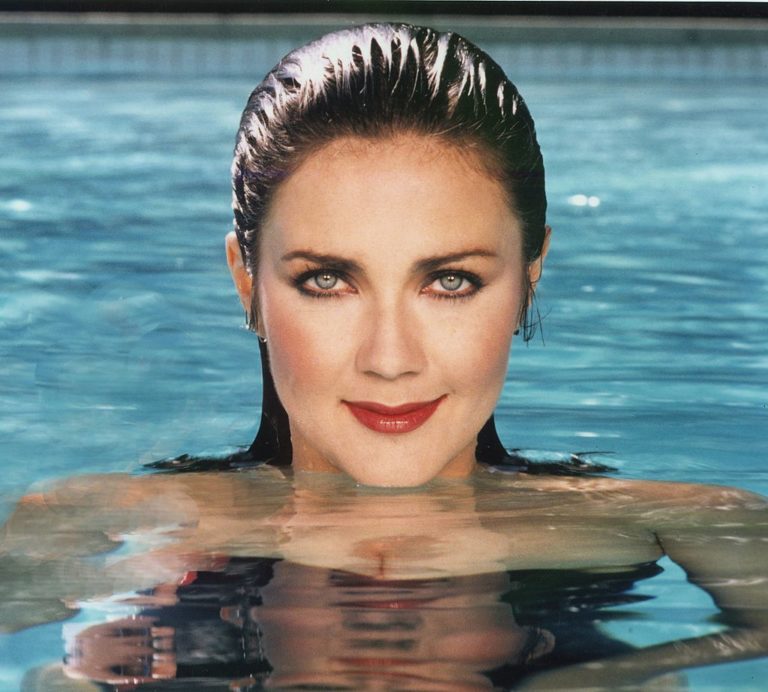
It was a fitting reflection from someone who had spent decades embodying a character that represented courage, dignity, and strength.
Her Love Life Before and After Fame
Long before she became one of television’s biggest stars, Lynda Carter had already experienced romance in her personal life. Before Wonder Woman launched her to fame, she was involved with French singer-songwriter Michel Polnareff.
But it was during the height of her career that she entered her first marriage.
In May 1977, Lynda married Ron Samuels, a well-known talent agent and promoter. The two had met the previous year at an ABC affiliates party, and at the time, Samuels was a major figure in the entertainment world. He worked with several high-profile actresses, including Jennifer O’Neill, Joyce DeWitt, Jaclyn Smith, and Barbara Carrera.
Their relationship reportedly began in a professional setting, with Ron inviting Lynda to his office to discuss business. But what started as meetings and conversations soon turned into dinners, tennis outings, and eventually romance.
By all outward appearances, they looked like the perfect Hollywood couple.
Lynda was a rising star, breathtakingly beautiful and internationally admired. Ron was successful, polished, and well connected. Together, they represented glamour, youth, and success. When they married, she was 25 years old, and he was 35. For the wedding, she wore a Victorian-style gown designed by Don Feld, the same designer behind her famous Wonder Woman costume.
For a time, they were one of the entertainment industry’s most talked-about couples.
But behind the polished image, the marriage was far from ideal.
A Difficult First Marriage
Years later, Lynda would speak more openly about the emotional strain she experienced during her first marriage. Looking back, she described it as a deeply unhappy period and referred to it as an “unfortunate chapter” in her life.
Even during the marriage itself, signs of tension were already visible.

One major point of conflict involved starting a family. Lynda wanted children, but Ron repeatedly asked her to wait. First it was a couple of years, and then, when that time passed, he reportedly wanted to delay it again. That issue became one of several emotional stress points in the relationship.
In a 1980 interview, Lynda admitted that the periods between projects were especially hard on her emotionally. During those times, she struggled with insomnia, overthinking, and heightened sensitivity.
“If my husband says one word, just one word that hurt my feelings, I analyze it. I go over it a million times,” she once said.
Eventually, the marriage came to an end.
In June 1982, Lynda Carter and Ron Samuels finalized their divorce, closing the chapter on one of Hollywood’s most glamorous — but ultimately troubled — relationships.
Despite the pain, Lynda later expressed grace and maturity when reflecting on the breakup.
“I hope he forgives me and I have forgiven him because it was painful for both people,” she said. “And I wish him — honestly and truly — wish him well.”
Finding Real Love and Leaving Hollywood Behind
After the end of her first marriage, Lynda Carter eventually found the kind of love she had long hoped for.
In 1984, she married Robert A. Altman, an attorney from Washington, D.C., and this time, the relationship would become one of the most meaningful and stable parts of her life.
The two first met at a business dinner in Memphis, Tennessee, organized by the cosmetics brand Maybelline, for which Lynda was serving as a spokesperson. Robert reportedly only attended because a friend convinced him to go, mentioning that the actress who played Wonder Woman would be there.
Ironically, he wasn’t even particularly interested.
“I thought the last thing I wanted was to go to dinner and get mixed up with some Hollywood actress,” he once admitted.
Thankfully, he changed his mind.
Seated next to one another, the pair connected almost instantly. Their chemistry was obvious, and according to later accounts, they became so absorbed in each other that it was nearly noticeable to everyone else at the table.
For Lynda, who had already been through a painful marriage, meeting Robert felt completely different. She later described him not just as her husband, but as her best friend.
“This is my first real marriage,” she once said. “Robert is my best friend… A friend doesn’t try to control you.”
That simple statement revealed just how different this relationship felt compared to her first.
A New Chapter: Family and Motherhood
Lynda and Robert married at the Bel-Air Bay Club in Pacific Palisades, California, surrounded by a guest list that included names like Ed McMahon, Barbara Mandrell, and fellow actress Loni Anderson.
After marrying, the couple made a major life decision: they chose to settle away from the chaos of Hollywood.
They moved to Potomac, Maryland, where Lynda embraced a quieter, more grounded life focused on family rather than fame. It was a conscious step away from the spotlight — one that reflected her desire for something deeper and more lasting.
There, in their impressive 20,000-square-foot Georgian-style home, Lynda focused on raising their two children:
James Altman, born in January 1988
Jessica Carter Altman, born on October 7, 1990
Motherhood became one of the most meaningful roles of her life.
In a heartfelt Mother’s Day post in 2018, Lynda reflected on how profoundly becoming a mother had shaped her.
“Turns out my greatest adventure of all was becoming a mom. And I have loved every minute of it,” she wrote.
It was a touching glimpse into the side of her life that fans didn’t always see — not the actress, not the icon, but the mother who found her deepest joy at home.
Lynda Carter Today
Now in her 70s, Lynda Carter remains active, admired, and beloved by fans across generations. Even as time has passed, she has maintained the elegance, warmth, and grace that first made her stand out decades ago.
But recent years have also brought deep personal heartbreak.
In February 2021, Lynda suffered a devastating loss when her beloved husband, Robert Altman, passed away at the age of 73 after battling a rare form of leukemia. He died in a hospital in Baltimore, leaving behind a grief that Lynda has spoken about with heartbreaking honesty.
His death deeply affected her, and in the years since, she has continued to honor his memory publicly and tenderly.
On what would have been his 75th birthday, she shared a deeply emotional tribute, writing:
“To me you cannot be gone, because the love you gave so freely endures. It lives on in me, our children, and the many people whose lives you touched.”
She continued with a poetic and deeply personal reflection, imagining herself singing to him through mountain canyons and across the ocean — a powerful expression of enduring love and grief.
It was one of many moments that reminded fans that beneath the glamour and fame, Lynda Carter is also someone who has endured profound loss with remarkable grace.
Her Battle With Alcohol and Her Recovery Journey
In addition to opening up about grief, Lynda has also been candid about another deeply personal struggle: alcohol addiction.
She has shared that her issues with drinking began during the unhappiness of her first marriage. Unlike some who struggle from a young age, Lynda explained that she didn’t even begin drinking until her mid-20s — but once it became part of her life, it created pain and instability she eventually had to confront.
Over time, she entered recovery and committed to lasting change.
Today, she has celebrated more than 20 years of sobriety, a milestone she has spoken about with pride and gratitude. She has also credited Robert with being one of her greatest sources of support during that journey.
She once described him as her “knight in shining armor”, someone who stood by her during one of the most difficult battles of her life.
“I’ve been in recovery for 23 years,” she said in 2021. “That was a long time ago and now I’m very happy.”
It was a powerful reminder that strength doesn’t only come from what people see on screen. Sometimes, the most heroic battles are the ones fought in private.
Still Captivating Fans
Even today, Lynda Carter continues to capture public admiration.
In 2024, she once again drew attention online after posting a throwback photo comparing her younger self to her current appearance. With the caption “How it started vs. how it’s going,” she gave fans a glimpse of her timeless beauty and confidence.
The response was immediate, with admirers flooding the comments to praise her enduring elegance and youthful appearance.
For many, she remains just as radiant and captivating now as she was in her Wonder Woman days.
And perhaps that’s because what made Lynda Carter so unforgettable was never just her appearance — it was her presence.
Her strength. Her intelligence. Her resilience. Her warmth.
A Legacy Bigger Than Television
Lynda Carter’s life story is about far more than one famous costume or one unforgettable role.
Yes, she became an icon through Wonder Woman. Yes, she represented female power at a time when television rarely allowed women to occupy that space. But what has made her legacy endure is the life she built beyond the screen.
She has been a performer, a mother, a wife, a survivor, an advocate, and a symbol of resilience. She has faced career uncertainty, public objectification, heartbreak, addiction, and personal loss — and through it all, she has continued to carry herself with dignity and grace.
That is why so many people still admire her.
Because Lynda Carter didn’t just play a hero.
In many ways, she became one.
Conclusion
Lynda Carter’s journey is about far more than fame, beauty, or even the role that made her a household name. While she will forever be remembered as the original Wonder Woman, her real-life story may be even more inspiring than the character she portrayed on screen.
Through career struggles, heartbreak, motherhood, personal healing, and unimaginable loss, she has shown a kind of strength that goes beyond television. Her legacy is not only built on the image of a superhero, but on the grace, resilience, and courage she carried through every chapter of her life. And that is exactly why, after all these years, Lynda Carter remains a true icon.
For decades, the world has known Lynda Carter as the woman who seemed almost too perfect to be real — stunning, powerful, elegant, and unforgettable. But behind the dazzling smile, the iconic costume, and the image millions admired from afar was a life far more complicated than most people ever realized.
Long before she became a television legend, and even after the spotlight faded, Lynda faced heartbreak, personal battles, painful loss, and difficult choices that never made it into the glamorous headlines. And once you learn what she endured behind the scenes, it becomes clear that her greatest strength was never just playing Wonder Woman — it was surviving everything life threw at her when the cameras stopped rolling.
When many people hear the name Lynda Carter, one image instantly comes to mind: Wonder Woman. For an entire generation, she wasn’t just a television star — she was a symbol of strength, beauty, confidence, and female empowerment at a time when women in action roles were still incredibly rare.
For those who grew up in the 1970s, Lynda Carter was more than an actress playing a superhero. She became a childhood icon. Countless young girls wrapped towels around their shoulders like capes, borrowed tiaras, and imagined themselves saving the world just like Wonder Woman. She represented something powerful: a woman who was fearless, graceful, and impossible to ignore.
And while many admired her stunning looks, Lynda Carter’s legacy goes far deeper than beauty. Her rise to fame was not effortless, and before she became one of television’s most recognizable stars, she had to overcome insecurity, rejection, financial struggle, and the pressures of an industry that often underestimated women.
A Childhood Shaped by Talent and Insecurity
Lynda Carter was born in 1951 in Phoenix, Arizona, and even from a very young age, she showed signs of being comfortable in front of an audience.
At just five years old, she made her first public television appearance on Lew King’s Talent Show, offering an early glimpse of the charisma that would later make her famous.
But while she clearly had natural presence, her early interests were not centered on acting. As she grew older, music became her true passion. In high school, she joined a band and started performing publicly. By the age of 15, she was already earning money by singing at a local pizza parlor, bringing in around $25 a weekend.
Despite her talent, Lynda’s youth was not without challenges. Her parents divorced when she was young, and she also struggled with self-confidence — particularly because of her height. Long before it became one of her most striking features, being tall made her feel different and self-conscious.
She later admitted that although she often laughed off comments about her height, internally she was deeply affected by them.
“I was a clown. Inside I felt like crumbling jelly,” she once said.
Even so, Lynda often spoke warmly about her upbringing. She described it as traditional, grounded, and deeply moral. Sundays were spent at church, family life was simple and structured, and her mother in particular worried about the idea of her daughter becoming part of the Hollywood world.
“It was so moral, so middle-class, so old-fashioned and so good,” she once reflected.
From College Student to Beauty Queen
After high school, Lynda briefly attended Arizona State University, where she was voted “Most Talented.” But despite being on a conventional path, she made a bold decision: she left college to fully pursue a career in music.
At the time, she believed singing would be her future. But life had other plans.
In 1972, a new opportunity unexpectedly changed her direction when she entered — and won — a local beauty pageant in Arizona. That victory led her to the Miss USA competition, which she also won, giving her national visibility and eventually a place in the Miss World pageant, where she finished in the Top 15.
Although the title helped open doors, Lynda later looked back on her pageant experience with mixed feelings. Rather than glamorizing it, she spoke honestly about how emotionally difficult it could be.
She described beauty competitions as having a kind of “built-in cruelty” and said the experience was not nearly as glamorous as people imagined. To her, the crown and sash didn’t define who she was — they were simply a stepping stone.
Breaking Into Hollywood the Hard Way
Determined to make a real career in entertainment, Lynda moved forward by studying acting in New York during the early 1970s. She took classes, sharpened her skills, and slowly began landing small television roles in shows like Starsky and Hutch and Cos.
But as with many aspiring performers, success did not come quickly.
Hollywood was intensely competitive, and despite her striking appearance and natural screen presence, Lynda struggled to gain traction. Living in Los Angeles, she began running out of money and reached a point where she was close to giving up altogether.
Her savings were nearly gone, and she was preparing to step away from her dream and take a more “normal” job.
Then, just as she was on the verge of returning home to Arizona, everything changed.
The Role That Changed Her Life Forever
In 1975, Lynda Carter landed the role that would define her career: Diana Prince, also known as Wonder Woman.
The timing could not have been more dramatic. She reportedly had just $25 in her bank account when she found out she had been cast. She was on the edge of abandoning Hollywood when her manager called with the life-changing news.
At the time, the series was a major breakthrough. Based on the iconic DC Comics character first created in 1941, Wonder Woman was one of the earliest female superheroes in popular culture. And in the middle of the women’s liberation movement of the 1970s, a television series led by a powerful woman felt especially meaningful.
Lynda Carter turned out to be the perfect choice.
She had the elegance, athleticism, beauty, and confidence the role demanded — but more importantly, she brought humanity and dignity to the character. She didn’t just look like Wonder Woman. She made audiences believe in her.
Wonder Woman and the Power of Representation
For many viewers, especially women and girls, Wonder Woman represented something rarely seen on television at the time: a woman who was not waiting to be rescued, not existing merely as a romantic side character, and not limited by the expectations of men.
The series debuted at a moment when feminist ideas were becoming more visible in American culture. In fact, the early episodes of Wonder Woman openly embraced themes of female empowerment, equality, and strength.
One memorable line from the series captured that spirit perfectly:
“Any civilization that does not recognize the female is doomed to destruction.”
It was bold, especially for network television.
However, not everyone behind the scenes was comfortable with that message. According to Lynda, network executives worried that the show’s feminist themes might alienate viewers and be seen as “dangerous.” Over time, some of the more direct messaging was softened or reduced — something she later admitted disappointed her.
Still, the show’s impact remained undeniable.
Standing Her Ground Behind the Scenes
Although she became the face of one of television’s most powerful female characters, Lynda still had to fight for respect behind the scenes.
One of the clearest examples came when producers initially wanted to use a male stunt double for some of Wonder Woman’s more dangerous action scenes. The idea of using a female stunt performer apparently seemed unrealistic to them — even for a show centered around a female superhero.
Lynda strongly objected.
When the script called for Wonder Woman to hang from a flying helicopter, she chose to perform the stunt herself. After proving she could handle the physical demands of the role, the producers finally agreed to hire a female stunt double.
It was a small but important victory — one that reflected the broader struggle women often faced in the entertainment industry at the time.
Beauty, Fame, and the Burden of Being Seen
As Wonder Woman became a hit, Lynda Carter’s fame exploded. She quickly became one of the most recognizable women in the world.
In 1978, she was voted “The Most Beautiful Woman in the World,” and a now-famous poster of her in a tied crop top became the best-selling poster of the year.
To many, she was the ultimate fantasy figure of the era.
But while the public often celebrated her appearance, Lynda was candid about the discomfort that came with being objectified. She understood that admiration often crossed into something more invasive and unsettling.
She admitted that it was difficult knowing that images of her body were being displayed in ways she had never imagined or intended. Even the famous poster that sold over a million copies was something she later spoke about with visible discomfort.
In interviews, she made it clear that she wanted women to connect with Wonder Woman not because she was glamorous, but because she was strong, inspiring, and empowering.
“I want women to want to be me, or be my best friend,” she once explained.
That distinction mattered to her.
Life After Wonder Woman
When Wonder Woman ended in 1979 after three successful seasons, Lynda Carter had already secured her place in television history. But the end of the show was not the end of her career.
In fact, her success opened many new doors.
She met high-profile figures such as President Ronald Reagan, appeared on beloved programs like The Muppet Show, and even starred in her own musical television specials, reconnecting with her original love of music.
Financially, she was thriving as well. Reports at the time stated that she earned $1 million for 26 episodes of Wonder Woman, a major achievement that allowed her to live a glamorous Hollywood lifestyle. She reportedly lived in a luxurious French-style mansion in Benedict Canyon, complete with German Shepherd guard dogs and an impressive collection of Bentleys.
But Lynda didn’t simply rely on past fame.
She continued acting, taking on roles such as Carole Stanwyck in the crime drama Partners in Crime, where she starred opposite Loni Anderson. The role allowed her to remain visible on screen while proving she was more than just one iconic character.
A Career Built on Reinvention
Throughout the 1990s, Lynda Carter remained active in the entertainment world by evolving with it.
She founded her own production company, Potomac Productions, showing that she was not only a performer but also a businesswoman with creative control over her future. She also appeared in several television movies and expanded her career through voice-over work, continuing to find new ways to stay connected to audiences.
Unlike many stars who are forever trapped in the shadow of one role, Lynda Carter found ways to honor Wonder Woman while still building a broader identity.
And yet, no matter how many projects followed, the image of her as Wonder Woman remained timeless.
More Than a TV Star
What makes Lynda Carter unforgettable is not simply that she played a superhero. It is that she became one — at least in the eyes of those who watched her.
She represented confidence at a time when women were still being told to take up less space. She embodied glamour without losing strength. She fought against stereotypes while working inside an industry built on them.
And perhaps most importantly, she gave generations of girls permission to imagine themselves as powerful.
That kind of legacy lasts far longer than a television series.
Lynda Carter’s Life Beyond Wonder Woman: Love, Loss, Family, and Strength
As the new millennium began, Lynda Carter continued to expand her career, proving that her star power extended far beyond the role that made her famous.
While older generations will always remember her as the original Wonder Woman, younger audiences may recognize her from later projects — including her role as Pauline in the 2005 film adaptation of The Dukes of Hazzard.
At the same time, she also embraced the stage, stepping into the world of theatre with a role in the West End production of Chicago in London. It was yet another reminder that Lynda’s talents were never limited to television alone. Whether performing on screen, on stage, or in music, she continued to show the same elegance and confidence that first captivated audiences in the 1970s.
Still, no matter how many new roles she took on, Lynda Carter remained forever connected to the superhero character that changed her life. Over the years, she has maintained close ties to the Wonder Woman legacy and the broader world of DC Comics.
Her importance to that universe has never been forgotten. In fact, DC Comics officially honored her as one of the individuals who helped shape the cultural significance of the iconic heroine. Her influence has also remained so strong that, before filming began on the 2017 Wonder Woman movie, director Patty Jenkins personally reached out to her in hopes of arranging a cameo appearance.
Although fans would have loved to see her return in that way, Lynda was unable to accept the offer due to scheduling conflicts.
“At that time we couldn’t get our timing together,” she explained. “So, this next time, if she writes me a decent part, I might do it.”
That possibility alone was enough to excite longtime fans who still see her as the definitive Wonder Woman.
A Symbol of Female Empowerment
Lynda’s bond with the character has never simply been about nostalgia. It has also been about what Wonder Woman represents.
In 2016, she took part in a major celebration at the United Nations, marking the 75th anniversary of Wonder Woman’s first appearance. During the event, the beloved superhero was named the UN’s Honorary Ambassador for the Empowerment of Women and Girls.
For Lynda, the moment carried enormous emotional and symbolic significance.
“The greatest honor and responsibility of playing Wonder Woman was serving as a role model for fans around the world, particularly girls,” she said during the ceremony.
She also spoke about the deeper impact of the character, noting how a superhero can be both powerful and compassionate — inspiring women to believe in themselves while encouraging men to embrace equality.
It was a fitting reflection from someone who had spent decades embodying a character that represented courage, dignity, and strength.
Her Love Life Before and After Fame
Long before she became one of television’s biggest stars, Lynda Carter had already experienced romance in her personal life. Before Wonder Woman launched her to fame, she was involved with French singer-songwriter Michel Polnareff.
But it was during the height of her career that she entered her first marriage.
In May 1977, Lynda married Ron Samuels, a well-known talent agent and promoter. The two had met the previous year at an ABC affiliates party, and at the time, Samuels was a major figure in the entertainment world. He worked with several high-profile actresses, including Jennifer O’Neill, Joyce DeWitt, Jaclyn Smith, and Barbara Carrera.
Their relationship reportedly began in a professional setting, with Ron inviting Lynda to his office to discuss business. But what started as meetings and conversations soon turned into dinners, tennis outings, and eventually romance.
By all outward appearances, they looked like the perfect Hollywood couple.
Lynda was a rising star, breathtakingly beautiful and internationally admired. Ron was successful, polished, and well connected. Together, they represented glamour, youth, and success. When they married, she was 25 years old, and he was 35. For the wedding, she wore a Victorian-style gown designed by Don Feld, the same designer behind her famous Wonder Woman costume.
For a time, they were one of the entertainment industry’s most talked-about couples.
But behind the polished image, the marriage was far from ideal.
A Difficult First Marriage
Years later, Lynda would speak more openly about the emotional strain she experienced during her first marriage. Looking back, she described it as a deeply unhappy period and referred to it as an “unfortunate chapter” in her life.
Even during the marriage itself, signs of tension were already visible.
One major point of conflict involved starting a family. Lynda wanted children, but Ron repeatedly asked her to wait. First it was a couple of years, and then, when that time passed, he reportedly wanted to delay it again. That issue became one of several emotional stress points in the relationship.
In a 1980 interview, Lynda admitted that the periods between projects were especially hard on her emotionally. During those times, she struggled with insomnia, overthinking, and heightened sensitivity.
“If my husband says one word, just one word that hurt my feelings, I analyze it. I go over it a million times,” she once said.
Eventually, the marriage came to an end.
In June 1982, Lynda Carter and Ron Samuels finalized their divorce, closing the chapter on one of Hollywood’s most glamorous — but ultimately troubled — relationships.
Despite the pain, Lynda later expressed grace and maturity when reflecting on the breakup.
“I hope he forgives me and I have forgiven him because it was painful for both people,” she said. “And I wish him — honestly and truly — wish him well.”
Finding Real Love and Leaving Hollywood Behind
After the end of her first marriage, Lynda Carter eventually found the kind of love she had long hoped for.
In 1984, she married Robert A. Altman, an attorney from Washington, D.C., and this time, the relationship would become one of the most meaningful and stable parts of her life.
The two first met at a business dinner in Memphis, Tennessee, organized by the cosmetics brand Maybelline, for which Lynda was serving as a spokesperson. Robert reportedly only attended because a friend convinced him to go, mentioning that the actress who played Wonder Woman would be there.
Ironically, he wasn’t even particularly interested.
“I thought the last thing I wanted was to go to dinner and get mixed up with some Hollywood actress,” he once admitted.
Thankfully, he changed his mind.
Seated next to one another, the pair connected almost instantly. Their chemistry was obvious, and according to later accounts, they became so absorbed in each other that it was nearly noticeable to everyone else at the table.
For Lynda, who had already been through a painful marriage, meeting Robert felt completely different. She later described him not just as her husband, but as her best friend.
“This is my first real marriage,” she once said. “Robert is my best friend… A friend doesn’t try to control you.”
That simple statement revealed just how different this relationship felt compared to her first.
A New Chapter: Family and Motherhood
Lynda and Robert married at the Bel-Air Bay Club in Pacific Palisades, California, surrounded by a guest list that included names like Ed McMahon, Barbara Mandrell, and fellow actress Loni Anderson.
After marrying, the couple made a major life decision: they chose to settle away from the chaos of Hollywood.
They moved to Potomac, Maryland, where Lynda embraced a quieter, more grounded life focused on family rather than fame. It was a conscious step away from the spotlight — one that reflected her desire for something deeper and more lasting.
There, in their impressive 20,000-square-foot Georgian-style home, Lynda focused on raising their two children:
James Altman, born in January 1988
Jessica Carter Altman, born on October 7, 1990
Motherhood became one of the most meaningful roles of her life.
In a heartfelt Mother’s Day post in 2018, Lynda reflected on how profoundly becoming a mother had shaped her.
“Turns out my greatest adventure of all was becoming a mom. And I have loved every minute of it,” she wrote.
It was a touching glimpse into the side of her life that fans didn’t always see — not the actress, not the icon, but the mother who found her deepest joy at home.
Lynda Carter Today
Now in her 70s, Lynda Carter remains active, admired, and beloved by fans across generations. Even as time has passed, she has maintained the elegance, warmth, and grace that first made her stand out decades ago.
But recent years have also brought deep personal heartbreak.
In February 2021, Lynda suffered a devastating loss when her beloved husband, Robert Altman, passed away at the age of 73 after battling a rare form of leukemia. He died in a hospital in Baltimore, leaving behind a grief that Lynda has spoken about with heartbreaking honesty.
His death deeply affected her, and in the years since, she has continued to honor his memory publicly and tenderly.
On what would have been his 75th birthday, she shared a deeply emotional tribute, writing:
“To me you cannot be gone, because the love you gave so freely endures. It lives on in me, our children, and the many people whose lives you touched.”
She continued with a poetic and deeply personal reflection, imagining herself singing to him through mountain canyons and across the ocean — a powerful expression of enduring love and grief.
It was one of many moments that reminded fans that beneath the glamour and fame, Lynda Carter is also someone who has endured profound loss with remarkable grace.
Her Battle With Alcohol and Her Recovery Journey
In addition to opening up about grief, Lynda has also been candid about another deeply personal struggle: alcohol addiction.
She has shared that her issues with drinking began during the unhappiness of her first marriage. Unlike some who struggle from a young age, Lynda explained that she didn’t even begin drinking until her mid-20s — but once it became part of her life, it created pain and instability she eventually had to confront.
Over time, she entered recovery and committed to lasting change.
Today, she has celebrated more than 20 years of sobriety, a milestone she has spoken about with pride and gratitude. She has also credited Robert with being one of her greatest sources of support during that journey.
She once described him as her “knight in shining armor”, someone who stood by her during one of the most difficult battles of her life.
“I’ve been in recovery for 23 years,” she said in 2021. “That was a long time ago and now I’m very happy.”
It was a powerful reminder that strength doesn’t only come from what people see on screen. Sometimes, the most heroic battles are the ones fought in private.
Still Captivating Fans
Even today, Lynda Carter continues to capture public admiration.
In 2024, she once again drew attention online after posting a throwback photo comparing her younger self to her current appearance. With the caption “How it started vs. how it’s going,” she gave fans a glimpse of her timeless beauty and confidence.
The response was immediate, with admirers flooding the comments to praise her enduring elegance and youthful appearance.
For many, she remains just as radiant and captivating now as she was in her Wonder Woman days.
And perhaps that’s because what made Lynda Carter so unforgettable was never just her appearance — it was her presence.
Her strength. Her intelligence. Her resilience. Her warmth.
A Legacy Bigger Than Television
Lynda Carter’s life story is about far more than one famous costume or one unforgettable role.
Yes, she became an icon through Wonder Woman. Yes, she represented female power at a time when television rarely allowed women to occupy that space. But what has made her legacy endure is the life she built beyond the screen.
She has been a performer, a mother, a wife, a survivor, an advocate, and a symbol of resilience. She has faced career uncertainty, public objectification, heartbreak, addiction, and personal loss — and through it all, she has continued to carry herself with dignity and grace.
That is why so many people still admire her.
Because Lynda Carter didn’t just play a hero.
In many ways, she became one.
Conclusion
Lynda Carter’s journey is about far more than fame, beauty, or even the role that made her a household name. While she will forever be remembered as the original Wonder Woman, her real-life story may be even more inspiring than the character she portrayed on screen. Through career struggles, heartbreak, motherhood, personal healing, and unimaginable loss, she has shown a kind of strength that goes beyond television. Her legacy is not only built on the image of a superhero, but on the grace, resilience, and courage she carried through every chapter of her life. And that is exactly why, after all these years, Lynda Carter remains a true icon.