
Jessica Alves’ life reads like a storybook mixed with a cautionary tale—a narrative of beauty, identity, and risk intertwined.
From her childhood as Rodrigo Alves, drawn to dolls and perfection, to her present incarnation as a human Barbie, her journey explores the costs of transformation, both physical and emotional. Behind the glitz, social media fame, and carefully curated images lies a story of medical danger, persistence, and an unwavering pursuit of self-expression.
Early Life and Identity

Born on July 30, 1983, in São Paulo, Brazil, to a British father and Brazilian mother, Jessica demonstrated feminine inclinations from a young age. Encouraged by her grandfather, she explored her love of dolls and dress-up, playing in her mother’s shoes and clothing. Yet adolescence brought struggles with self-esteem, particularly dissatisfaction with her nose.
Jessica moved to London to attend the London School of Economics, and in 2004, she underwent her first plastic surgery. That initial procedure would spark a lifelong obsession with aesthetic perfection, shaping the path of her personal and public life.
Transition and Embracing Jessica
In 2020, Jessica publicly came out as transgender. She explained that although she had been perceived as Ken, she had always identified as Barbie. Beginning hormone therapy, she developed feminine curves and embraced a full transition, including hair extensions, facial feminization surgery, and a D-cup bust. She now uses “she” and “her” pronouns.
“I tried living as a man, even sculpting fake muscles, but it never felt right,” she shared. “Now my body finally mirrors my mind.”
Her transformation has coincided with a public career, including appearances on Celebrity Big Brother, music releases, and cultivating a large Instagram following. Jessica’s story is not just about surgery; it is about aligning her external self with her internal identity.
The Plastic Surgery Journey
Jessica’s pursuit of perfection is extraordinary. Over two decades, she has undergone more than 100 procedures, including rhinoplasties, Botox, fillers, liposuction, pec implants, rib removals, cat-eye lifts, and chemical peels. The journey has not been without danger.

In 2016, she faced necrosis following a procedure, threatening her nose and septum. Doctors warned of gangrene, requiring intensive care in Spain. After her 11th rhinoplasty, her nose began collapsing, leaving some surgeons unwilling to operate. Ultimately, she found a specialist in Istanbul who restored function using cartilage from her ear.
Her gender-affirming surgeries have included breast augmentation, Adam’s apple reduction, and penile inversion with testicle removal. Facelifts and skin removal have continued, the most recent in 2025 involving nearly four inches of loose skin. Despite repeated health risks, Jessica views each surgery as essential to expressing her authentic self.

Public Life and Reflection
Jessica’s extreme transformation has attracted global attention, sparking debate about beauty, identity, and medical ethics. Yet for her, the focus remains personal fulfillment. She revels in fashion, beauty routines, and self-expression, sharing her experiences openly with followers worldwide.

Her story embodies both the promise and the peril of radical self-reinvention: the joy of living authentically, tempered by the very real risks of surgical intervention.
Conclusion
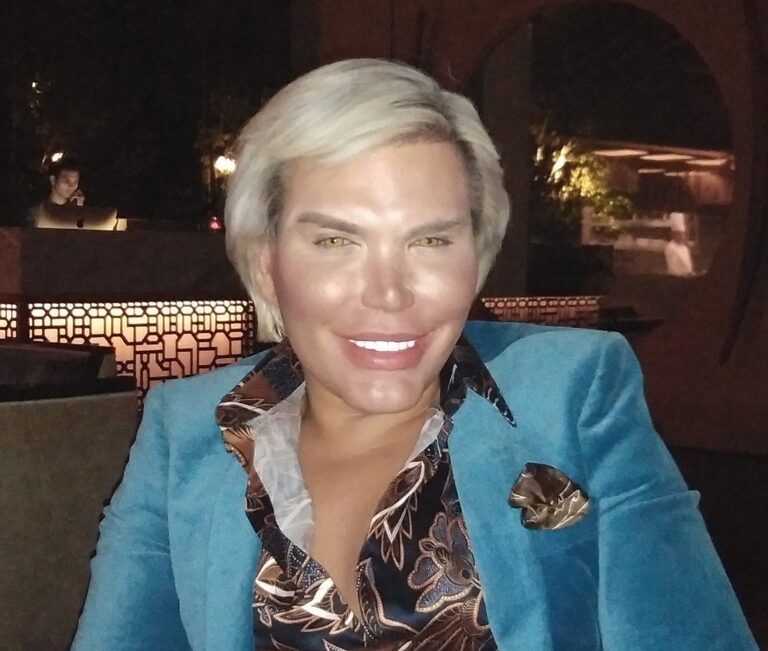
Jessica Alves’ life demonstrates the complex intersection of identity, aesthetics, and courage. From a childhood captivated by dolls to her present as a living Barbie, she has pursued self-expression boldly and without compromise. Her journey shows that the pursuit of authenticity can involve challenges, scrutiny, and medical risks—but the ultimate reward is the freedom to live as one’s true self.