
A Viral Video, Frozen Funds, and a Governor Under Fire: Inside Minnesota’s Daycare Controversy
At first glance, it seemed like a straightforward investigation: a man with a camera, a handful of locked doors, and a nagging question—where did the money go? But within days, a single video exploded into a national controversy, triggering federal scrutiny, freezing millions in funding, and placing Minnesota Governor Tim Walz under intense political pressure.
The Video That Sparked the Firestorm

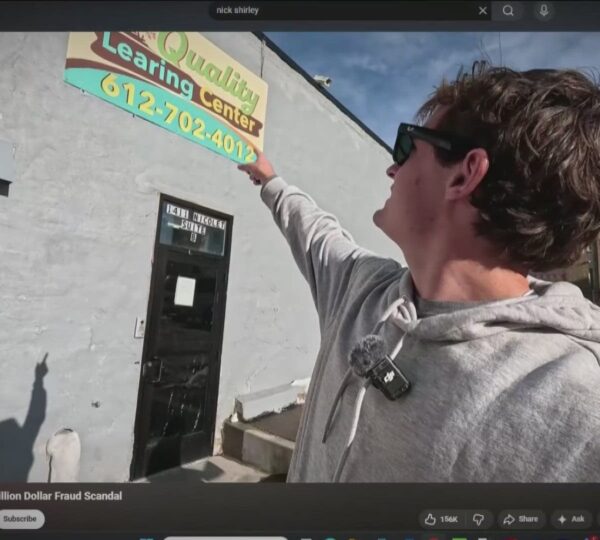
In late December 2025, independent content creator Nick Shirley released a 42-minute video documenting visits to several licensed childcare centers in and around Minneapolis. The footage showed locked entrances, empty parking lots, and facilities that appeared inactive—despite public records indicating they had received substantial funding through Minnesota’s Child Care Assistance Program (CCAP).
CCAP is a federally supported program administered by states to help low-income families afford childcare by subsidizing provider costs.
One widely shared clip showed a location labeled Quality Learning Center, its doors locked and no children present. Shirley cited publicly available payment records suggesting the center had received nearly $1.9 million in CCAP funding, raising questions about oversight and accountability.
The video spread rapidly across X, YouTube, and other platforms, quickly accumulating tens of millions of views. Amplified by high-profile conservative commentators, it soon reached a national audience far beyond Minnesota.
Political Backlash and Rapid Escalation
The response was immediate. Republican lawmakers—including U.S. House Majority Whip Tom Emmer—publicly demanded explanations from state officials and criticized Governor Walz, calling the footage evidence of serious oversight failures.

Nationally, the video fed into a broader narrative about alleged waste and fraud in government-funded programs. Critics framed it as proof of systemic mismanagement.
However, journalists and local officials urged caution. They emphasized that brief, unscheduled visits—and visual impressions alone—do not constitute evidence of fraud, and that audits and inspections are the appropriate tools for determining misuse of funds.
State and Federal Responses
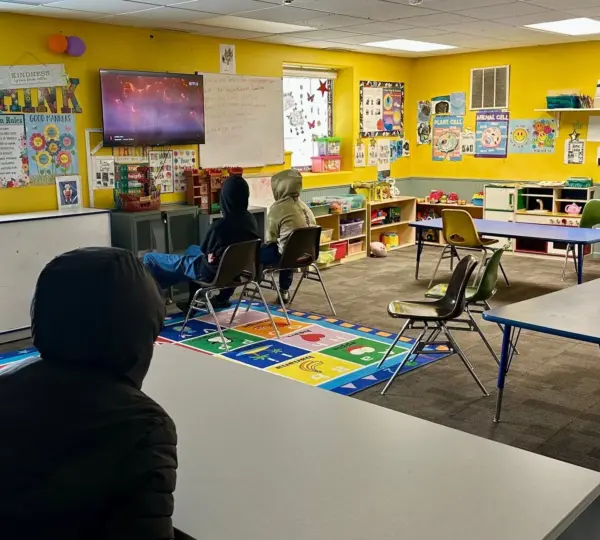
The Minnesota Department of Children, Youth and Families (DCYF) responded by launching follow-up inspections at all centers featured in the video. Officials confirmed that each had been inspected at least once in the previous six months as part of routine licensing requirements.
DCYF reported that:
No criminal fraud had been identified at the featured centers
Payments to providers had not been suspended based solely on the video
Two locations shown were confirmed closed—one for years, another recently—and were not receiving funds at the time
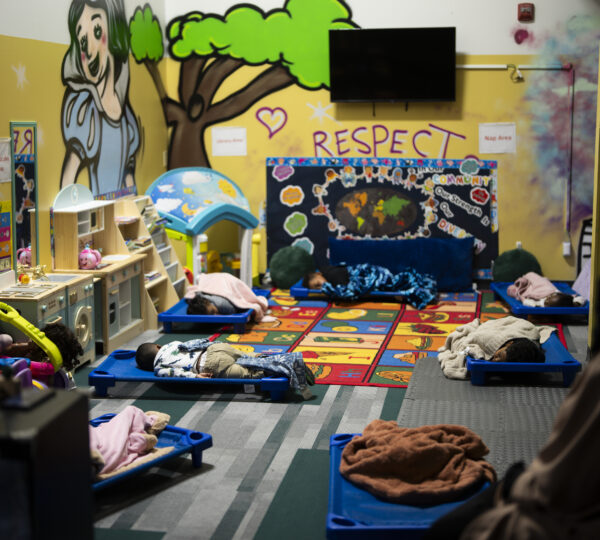
Most centers were found to be operational during subsequent inspections
Regulators also clarified that a lack of visible activity during a single visit does not necessarily indicate closure, as childcare centers often operate on variable schedules.
Federal Funding Freeze and Investigations
As scrutiny intensified, the U.S. Department of Health and Human Services (HHS) temporarily froze federal childcare payments to Minnesota, pending additional documentation.
HHS stated that payments would resume once the state submitted detailed attendance records, licensing verification, and compliance data.
Meanwhile, the FBI and Department of Homeland Security confirmed they were reviewing potential misuse of federal programs. Importantly, federal agencies stressed that no fraud had been proven—only that investigations were ongoing.
Independent media reporting and follow-up inspections found no evidence of widespread fraud among the centers shown, though some had unrelated regulatory issues such as paperwork deficiencies or minor cleanliness violations.
Local outlets, including CBS Minnesota, confirmed that most facilities held valid licenses and had passed recent inspections.
Community Impact and Political Fallout
As the controversy grew, it became a broader political flashpoint.
Republicans renewed calls for stricter oversight and unannounced inspections of publicly funded programs. At the same time, civil rights advocates raised alarms that many of the targeted centers were owned by Somali American families, warning that the viral narrative risked fueling stigma and bias.
Several daycare operators reported harassment and threats following the video’s spread, prompting concerns about safety for staff and children.
Fact-checking organizations also debunked claims circulating online regarding political donations and alleged corruption, finding no supporting evidence.
The sustained pressure reportedly contributed to Governor Walz’s decision not to seek a third term, with the controversy cited as one of several political headwinds.
What the Controversy Reveals
Beyond the immediate fallout, the incident exposed deeper tensions:
The challenge of monitoring large public programs at scale
The speed at which viral media can shape public perception
The danger of conclusions forming before investigations conclude
The need to balance accountability with fairness and community protection
What began as a single video ultimately became a national debate about governance, social media power, and the limits of visual evidence.
Conclusion
The Minnesota daycare controversy stands as a cautionary tale for the digital age. Transparency and accountability are essential—but viral footage alone cannot replace thorough investigation or verified facts.
The episode shows how quickly narratives can harden, how real communities can be affected, and how perception can outpace reality. In the end, it reinforces a critical lesson: true accountability must be rooted in evidence, not just what a camera captures.