
Minnesota officials went to federal court seeking an emergency halt to sweeping ICE enforcement operations — only to have their request denied.
What was framed as a narrow legal move has grown into a flashpoint in the national debate over immigration enforcement, constitutional rights, and the limits of federal authority on local soil. As ICE continues its operations, questions about legality, public safety, and accountability remain unresolved.
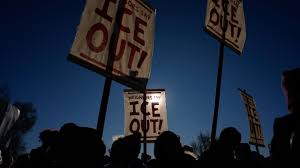
State and city leaders argued that federal immigration agents conducting “Operation Metro Surge” were overstepping legal boundaries. According to Minnesota officials, ICE raids and arrests have entered neighborhoods, hospitals, and other sensitive sites without sufficient oversight. They sought a temporary restraining order to pause the operation, claiming that warrantless detentions and aggressive tactics were spreading fear and violating residents’ constitutional protections.
U.S. District Judge Katherine Menendez declined to issue an immediate halt. In her ruling, the judge emphasized the seriousness of the concerns but concluded that the evidence presented so far did not justify an emergency block. Enforcement can continue as the case moves forward, leaving communities and officials to contend with ongoing federal operations while legal arguments are refined.
The federal government maintains that its actions are lawful immigration enforcement, resisting judicial restrictions on its tactics. Tensions in the Twin Cities have intensified, especially after the fatal shooting of Renee Nicole Good by ICE Agent Jonathan Ross on January 7. The Department of Justice later ruled the shooting was self-defense and declined to open a federal criminal investigation, a decision that has fueled protests and led to resignations among federal prosecutors.
Meanwhile, civil rights groups have filed separate lawsuits, alleging that ICE and Customs and Border Protection agents have engaged in warrantless detentions, suspicionless stops, and racial profiling—practices they argue violate constitutional protections and the Administrative Procedure Act. Judge Menendez has already imposed some limits, including barring arrests of peaceful protesters absent reasonable suspicion of criminal activity.
As the legal battles continue, Minnesota officials, civil liberties advocates, and immigrant communities are pressing for clearer judicial boundaries on federal enforcement. The government, meanwhile, maintains that its operations are necessary and lawful, leaving the state in a tense standoff between local authority and federal power.
Conclusion
Minnesota’s confrontation with federal immigration enforcement has escalated from a local dispute into a national flashpoint over law, civil liberties, and governmental authority. The judge’s refusal to immediately halt ICE operations highlights the legal complexity of balancing federal enforcement powers with community protections.
With lawsuits pending, protests mounting, and public scrutiny intensified by a fatal shooting during the raids, the central question persists: will the courts impose meaningful limits on federal immigration tactics, or allow operations to continue with minimal oversight?