
At a glance, the office barely registered as functional.
Its walls were worn, its records outdated, and its phone more decorative than useful. In a city crowded with neglected bureaucratic corners, this one blended seamlessly into the background. No attention followed when its doors reopened or when dormant files began circulating again.
Yet somewhere between an initial inspection notice and a looming court date, a subtle shift became impossible to ignore. The city’s long-standing equilibrium—maintained through quiet intimidation and procedural inertia—was beginning to fracture.
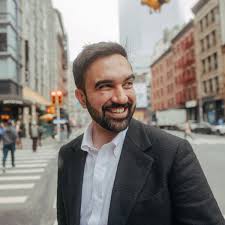
What followed caught many off guard. A little-known assemblymember walked into an aging Brooklyn building and treated it not as a relic, but as an instrument. Property owners scoffed at first, convinced that forms and filings could never disrupt entrenched power. That confidence evaporated when official letters started arriving, precise and unavoidable. Gradually, the machinery that had long discouraged tenants from speaking up began to jam. Each complaint filed, each inspection scheduled, each family represented added weight to a system landlords had grown accustomed to bending.
Zohran Mamdani’s wager rests on an unglamorous premise: that authority can be reconstructed from the ground floor up. By restoring the Mayor’s Office to Protect Tenants and appointing housing organizer Cea Weaver to lead it, he did more than revive a dormant department. He altered how leverage operates. Tenants are no longer navigating abstract promises or anonymous hotlines; they now follow case IDs, inspection dates, and enforcement deadlines. Protection has become tangible—documented, enforceable, and positioned directly between renters and well-funded legal opposition.
Around this enforcement core, the LIFT and SPEED task forces sketch out a wider strategy. Public land is reframed as shelter rather than bargaining chip. Regulatory obstacles are dismantled without erasing the neighborhoods they once constrained.
It is a precarious passage between decay and displacement, and Mamdani advances without a safety net. Either the city’s workforce remains rooted—able to live where it labors—or the effort becomes a brief flare of resistance, eventually absorbed by the system it challenged.
Conclusion
Zohran Mamdani’s emergence is not defined by lineage or theatrics, but by pressure—by probing whether existing institutions can be redirected instead of demolished. His method favors process over performance, deadlines over declarations, and enforcement over optics. Whether this chapter permanently reshapes the city or fades into municipal legend is still unknown. What is certain is that power has grown louder. It no longer murmurs behind closed doors. It knocks—and the city, at last, is paying attention.