
The doubts didn’t arrive all at once.
They accumulated quietly—through unexplained absences, carefully choreographed public moments, and decisions announced without the president visibly attached to them. When Joe Biden’s advanced prostate cancer diagnosis was disclosed, followed closely by the release of a revealing new book, those lingering uncertainties took on sharper focus.
Fresh scrutiny is now surrounding the final years of Biden’s presidency after Original Sin, a book by journalists Alex Thompson and Jake Tapper, alleged that real authority inside the White House rested with a small, insular group rather than the president himself.
According to the authors, this inner circle—dubbed the “Politburo”—controlled access, information, and key decisions while Biden’s direct role was increasingly limited.
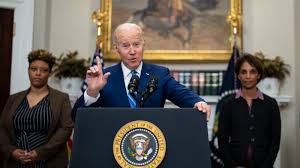
The book claims that longtime aides and family members, including former chief of staff Ron Klain, First Lady Jill Biden, and Hunter Biden, effectively managed the daily operations of the presidency. Their objective, the authors argue, was twofold: to protect Biden from political and personal strain, and to maintain continuity of power by narrowing decision-making to trusted hands.
Central to the controversy is the assertion that voters were never informed of how extensively authority had shifted away from the elected president. One anonymous aide quoted in the book allegedly summarized the strategy for a second term as: “win, then vanish”—suggesting Biden would serve largely as a symbolic figure while staff governed behind the scenes. Those involved reportedly defended the approach by portraying Donald Trump as a threat so severe that extraordinary internal control was justified.
Conclusion
The claims laid out in Original Sin raise difficult questions that go beyond individual figures or partisan loyalties. If accurate, they challenge fundamental expectations about transparency, consent, and who truly wields power in a democratic system.
As debate over the book intensifies, the issue at hand is no longer simply Biden’s health or leadership style—but whether the public was entitled to a fuller picture of how its government was being run, and where the boundaries of unelected authority should lie.