
At first glance, the encounter appeared routine—one of those procedural visits that rarely make headlines.
But beneath the surface, tensions had been building for months, fueled by political hostility, contested authority, and unresolved questions about the limits of federal power.
What unfolded at the gates of Delaney Hall has since come to symbolize a larger institutional struggle, where motive, perception, and authority blurred long before any court weighed in.
What began as a congressional oversight visit on May 9, 2025, quickly escalated into a legal and constitutional confrontation with implications far beyond a federal courtroom in Newark.
Representative LaMonica McIver’s brief visit to the Immigration and Customs Enforcement (ICE) facility at Delaney Hall, accompanied by Newark Mayor Ras Baraka and other lawmakers, ended in a confrontation outside the detention center. Federal prosecutors now allege that McIver assaulted and obstructed federal officers during the attempted detention of Baraka, transforming a routine inspection into criminal charges.
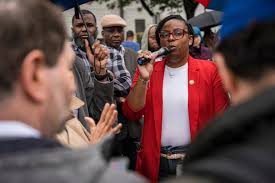
The Incident
According to the government, McIver interfered with federal agents attempting to detain Mayor Baraka. Charging documents assert that she made physical contact with at least two officers, striking one with her forearm and pushing past another. The indictment outlines three felony counts, including assault and obstruction, with potential sentences totaling up to 17 years.
McIver, meanwhile, pled not guilty to all charges, maintaining that her actions were part of constitutionally protected oversight. Her defense emphasizes that heightened tensions, restricted access, and confusion at the facility contributed to a chaotic environment rather than any unlawful intent.
Mayor Baraka was briefly charged with misdemeanor trespassing, a charge later dropped. Local officials criticized his arrest as unnecessary, highlighting the contentious nature of the day’s events.
Legal and Constitutional Stakes
The McIver case has evolved into a high-profile confrontation over the limits of congressional authority and executive enforcement. Her attorneys argue that she was exercising legitimate legislative oversight—a right protected under the Constitution’s Speech or Debate Clause. Prosecutors counter that physical interference with federal officers falls outside any legislative privilege.
In November 2025, U.S. District Judge Jamel K. Semper denied most of McIver’s motions to dismiss, ruling that her conduct was not shielded by legislative immunity and rejecting claims of selective or vindictive prosecution. Two felony counts will move forward to trial, reinforcing that oversight duties do not provide blanket protection for actions that cross legal boundaries.
At the same time, Judge Semper criticized the Department of Homeland Security for social media posts disparaging McIver and other lawmakers, ordering several removed to prevent prejudicing potential jurors.
Political and Public Reactions
The incident has intensified debates about congressional oversight, executive authority, and the politicization of law enforcement. Supporters argue that McIver was performing her duties under difficult conditions and that criminalizing oversight could set a dangerous precedent. Critics insist that no elected official is above laws prohibiting assault or obstruction of federal officers.
The case has also intersected with broader discussions about immigration enforcement, facility oversight, and the balance of local and federal authority. Delaney Hall, in particular, has been criticized for permitting and operational shortcomings, adding context to the confrontation.
Broader Implications
Beyond the individual charges, the McIver case raises fundamental constitutional questions: Where does legitimate oversight end and unlawful interference begin? The trial’s outcome could clarify the limits of congressional authority, shape how lawmakers interact with federal enforcement agencies, and influence how politically charged oversight is conducted in the future.
As the proceedings move toward trial, the case underscores the intersection of law, politics, and public perception. Social media commentary, official statements, and partisan narratives have layered complexity onto the legal process, highlighting the challenge of separating judicial facts from political framing.
Judge Semper’s efforts to limit prejudicial messaging reflect a broader concern about maintaining fairness and impartiality in highly visible, politically sensitive cases. The trial’s resolution will not only determine McIver’s personal and political fate but also influence broader understandings of institutional power, oversight responsibilities, and the balance between authority and accountability.
What began as a brief visit by a member of Congress has grown into a consequential legal and constitutional confrontation. The McIver case demonstrates how ordinary oversight can collide with enforcement authority, exposing tensions between elected officials and federal agencies. Its outcome may shape the rules of engagement for oversight, influence the interpretation of legislative immunity, and define how political and legal responsibilities intersect in contentious, high-stakes situations.
The fallout from a brief congressional visit to an ICE facility has stretched over months, encompassing federal felony charges, constitutional debates, political backlash, judicial rulings, and a broader national discussion about the limits of legislative oversight when it collides with executive authority.
At the heart of the controversy is a confrontation that began as a routine oversight visit and escalated into a physical encounter outside the Delaney Hall detention center. Federal prosecutors allege that Representative LaMonica McIver assaulted and obstructed officers as they attempted to detain Newark Mayor Ras Baraka, who accompanied the congressional delegation that day.
The government argues that McIver crossed a clear legal line, turning what she described as lawful oversight into criminal interference with federal law enforcement.
Her defense, in contrast, asserts that her actions were lawful and constitutionally protected, citing confusion, restricted access, and heightened tensions at the facility as contributing factors to a volatile situation.
The Incident
On May 9, 2025, McIver arrived at Delaney Hall with other Democratic lawmakers to conduct an unannounced congressional inspection—a form of oversight legally authorized to monitor federal agencies.
Prosecutors say tensions escalated when agents moved to arrest Mayor Baraka outside a secured portion of the facility. Charging documents allege that McIver then “forcibly impeded and interfered” with officers, making physical contact with at least two law enforcement personnel. She is charged with three counts under federal assault statutes, including striking one agent with her forearm and pushing past another. Conviction on all counts could carry a combined sentence of up to 17 years in prison.
Baraka faced a brief misdemeanor trespassing charge, later dropped. Local officials criticized the arrest as unnecessary and excessive.
McIver pled not guilty at her arraignment and signaled her intent to contest the charges aggressively. Her attorneys maintain that her actions fell within the scope of congressional oversight and did not constitute illegal conduct.
The Legal and Political Battle
What began as a dispute over conduct at a detention facility quickly became a broader confrontation involving congressional authority, prosecutorial discretion, and political messaging. McIver’s defense has framed the charges as politically motivated, noting inconsistent treatment compared with other politically charged cases, including January 6 participants who received pardons or had charges dismissed.
Her legal filings argue selective and vindictive prosecution, calling for dismissal on constitutional grounds. The case also raises questions about the Speech or Debate Clause, which generally shields lawmakers from prosecution for legislative acts. Her attorneys contend that McIver’s actions were protected oversight, while prosecutors argue that physically obstructing law enforcement falls outside legislative privilege.
In November 2025, U.S. District Judge Jamel K. Semper denied most motions to dismiss, ruling that her conduct was not covered by legislative immunity and that claims of selective prosecution lacked sufficient evidence. Two felony counts will proceed to trial, affirming that congressional duties do not provide blanket protection for actions outside normal oversight.
Judicial Concerns Beyond the Courtroom
While allowing the case to move forward, Judge Semper criticized aspects of the government’s public messaging.
In October, he sharply rebuked the Department of Homeland Security for social media posts disparaging McIver and other Democratic officials, warning they could prejudice potential jurors. Several posts were ordered removed to protect the fairness of judicial proceedings.
Oversight vs. Enforcement
At its core, the McIver case underscores the tension between legislative oversight and executive enforcement. Congress has long asserted the right to conduct unannounced inspections of federal facilities, including ICE detention centers. Advocates such as Amnesty International USA have defended this practice, cautioning that criminalizing oversight could chill congressional scrutiny and set a troubling precedent.
Supporters argue that confusion on May 9—stemming from the facility’s recent opening, unclear access protocols, and heightened public opposition—fueled escalation. Critics insist that oversight does not grant authority to obstruct arrests or interfere with officers performing their duties. This principle underpins the government’s prosecution, even after dropping Baraka’s lesser charge.
Broader Political Stakes
The case has drawn national attention and bipartisan commentary. Some view the prosecution as an attempt to intimidate elected officials challenging federal immigration policy, while others emphasize that public office does not exempt officials from accountability when physical confrontations occur.
The dispute also intersects with wider debates about immigration enforcement, detention conditions, and the governance of federally operated facilities. Delaney Hall itself has faced criticism from local officials, adding further friction between local and federal authorities.
Constitutional Implications
As pretrial motions continue, the case raises a central constitutional question: where does legitimate oversight end and unlawful interference begin? Conviction could narrow congressional oversight in contentious situations, while dismissal could reinforce protections for lawmakers operating under difficult conditions. How the courts answer this question will shape institutional norms for years.
Conclusion
What began as a routine oversight visit has become a defining legal and political confrontation. The McIver case highlights the delicate balance between congressional authority, federal enforcement, and political narratives.
Its outcome will influence how lawmakers engage in oversight, how agencies respond to scrutiny, and how courts safeguard fairness in politically charged contexts. Ultimately, the resolution will define not only the fate of one representative but also the boundaries of constitutional authority and democratic accountability in high-stakes, real-world conflicts.