
What looks like an ordinary kitchen routine—soaking strawberries in salt water—can quickly turn unsettling when tiny white threads start wriggling in the bowl.
Those seemingly fresh, juicy berries may suddenly reveal an unexpected surprise: larvae, often mistaken for worms, hiding inside the fruit. While it can be alarming, understanding what’s happening helps put the situation into perspective.
What Are the Tiny White Larvae in Strawberries?
The “worms” most people see are usually larvae of the spotted wing drosophila (Drosophila suzukii), a type of fruit fly. Unlike typical fruit flies, these pests lay eggs in ripening fruit, meaning larvae can develop inside strawberries before the berries even appear overripe.
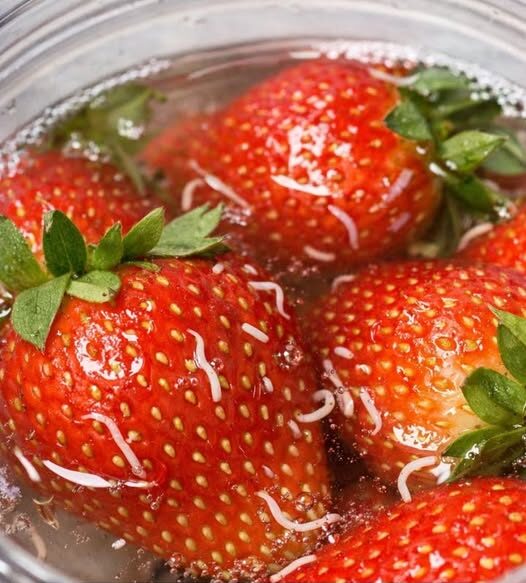
These larvae are very small—1 to 3 millimeters long—and pale white or translucent. Because they live inside the fruit, they are almost invisible until washing or soaking exposes them.
Why Strawberries Are Vulnerable
Strawberries’ thin skin, soft texture, and moisture-rich interior make them a perfect environment for larvae. Female flies use a serrated ovipositor to deposit eggs under the skin. Once hatched, the larvae feed inside the berry, hidden from view until disturbed.
Why Salt Water Makes the Larvae Appear
Salt water doesn’t create the larvae—it simply forces them out. Through osmosis, salt draws moisture from the fruit and creates a stressful environment for the larvae. In response, they wriggle out of the berry and into the water, revealing what was already present.
A common method is about one tablespoon of salt per cup of water, with a few minutes of soaking. Without this step, most people would never notice the tiny larvae.
Are They Dangerous?
The larvae are generally not harmful to humans. Accidental consumption rarely causes illness. However, their presence can indicate that a berry is past peak freshness, especially if accompanied by mushiness, mold, or an unusual smell.
How Farmers Manage the Problem
Growers use Integrated Pest Management (IPM) to minimize infestations without over-relying on chemicals. Common strategies include:
Monitoring traps for early detection
Regular crop inspections
Removing overripe or damaged fruit
Maintaining clean growing areas
Using netting or barriers when possible
Targeted treatments only when necessary
Even with careful management, larvae can occasionally appear, especially in warm seasons when insect populations rise.
How to Clean Strawberries at Home
Rinse with cold water to remove surface dirt.
Salt water soak for a few minutes to reveal hidden larvae.
Vinegar solution (1 part vinegar to 3 parts water) can help reduce bacteria and surface residue; rinse thoroughly afterward.
Inspect before eating for mold, mushy spots, or sour odor.
Store correctly—keep dry in the fridge and wash only before consuming.
Should You Stop Eating Strawberries?
No. Finding larvae is unpleasant but not a reason to avoid strawberries. These incidents are part of natural agricultural life. Proper washing, inspection, and storage make them safe and enjoyable.
Conclusion
Seeing tiny larvae emerge from strawberries after a salt water soak can be startling, but it is usually more shocking than dangerous. These tiny insects are part of the fruit’s natural environment, and the salt water simply exposes what was already there. With proper cleaning, inspection, and storage, strawberries remain a safe, sweet, and healthy treat.
Your summer snacks don’t need to be ruined—just handle them wisely, and you can continue enjoying one of the season’s most beloved fruits.