
Federal Judge Blocks Texas Mandate Requiring Ten Commandments Posters in Classrooms
Whispers of a secretive legal strategy have emerged in Texas, suggesting that the recent statewide push to display Ten Commandments posters in classrooms may have motivations beyond education.
Critics argue that lawmakers could be testing the limits of religious influence in public schools, potentially setting up a confrontation with the courts—and putting families in the middle.
A federal judge has now issued an injunction requiring multiple Texas public school districts to remove the posters and prohibiting them from installing new ones, ruling that the state law mandating the displays likely violates the First Amendment.
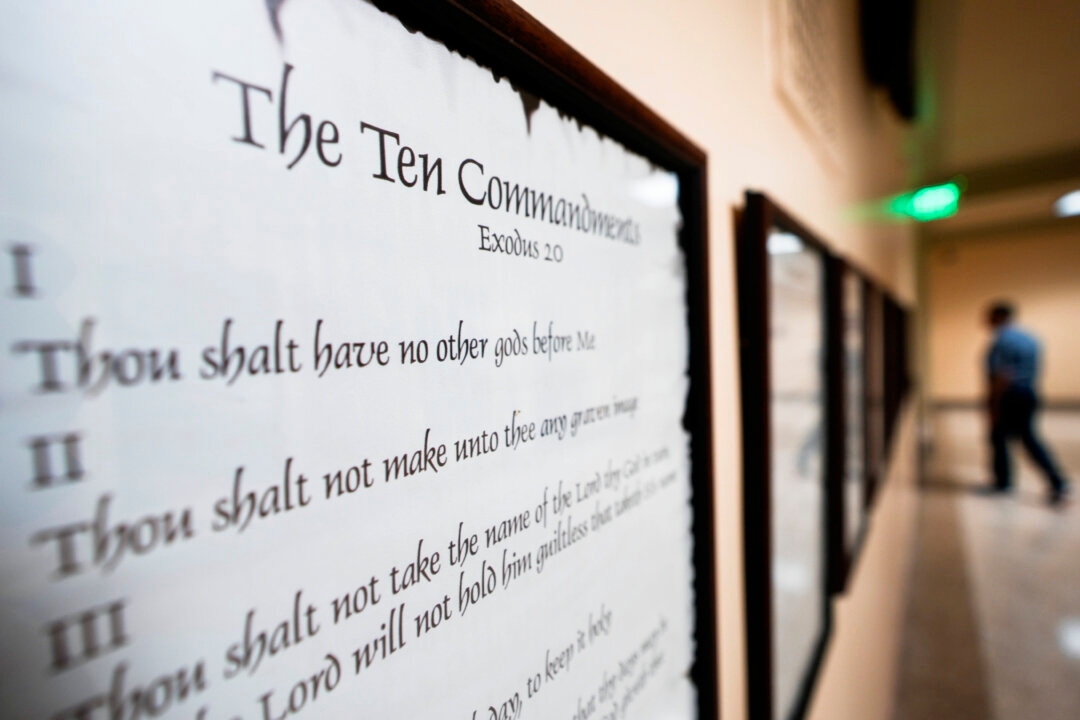
In a Nov. 18 preliminary injunction, U.S. District Judge Orlando L. Garcia determined that Senate Bill 10—which requires large, readable Ten Commandments posters in every classroom—breaches the Establishment Clause, which bars government endorsement of religion. The ruling orders affected districts to remove the posters by Dec. 1 and certify compliance.
“Displaying the Ten Commandments on classroom walls as outlined in S.B. 10 infringes on the Establishment Clause,” Garcia said.
The judge rejected requests to limit the injunction to certain classrooms or campuses, noting that students frequently move between classes and activities, making partial enforcement ineffective.
The lawsuit, filed in September, is supported by 15 families representing Christian, Jewish, Hindu, atheist, agnostic, and other faiths. Plaintiffs argue that the mandate pressures students to adopt or appear to endorse a specific religious doctrine.
Governor Greg Abbott signed S.B. 10 into law in June, requiring framed English translations of the Ten Commandments in each classroom.
Supporters claim the posters reflect the foundational principles of U.S. law and history. “The purpose of this bill is to highlight historically significant elements of our nation, both educationally and judicially,” said Republican state Rep. Candy Noble.
Opponents, however, see it as state-sponsored religious messaging. “Schools are for education, not evangelization,” said Chloe Kempf of the ACLU of Texas, praising Garcia’s ruling.
Previous challenges temporarily blocked the law in 11 districts, with one federal judge calling it “plainly unconstitutional.” Texas Attorney General Ken Paxton has appealed and recently filed lawsuits against districts refusing to display the posters, insisting that no district may ignore state law.
Conclusion
The ongoing legal battle highlights the tension between religious expression and constitutional protections in public education. As Texas schools navigate compliance, the case could set a lasting precedent on how far states may go in mandating religious symbols in classrooms.
For families and advocacy groups, the stakes extend beyond posters—they reflect a broader struggle over state influence in the personal and moral development of students.