
For weeks, rumors have circulated online about a potential $2,000 Trump payout—claims that checks had already been approved, printed, or even mailed.
Some posts suggested Americans might see the money before Christmas, while others hinted the IRS was quietly preparing for a nationwide rollout. The buzz was so intense that many people found themselves checking their accounts “just in case.” When Trump finally addressed the proposal, however, the reality proved far more complicated—and far less immediate—than the speculation suggested.
Trump’s $2,000 Tariff Dividend
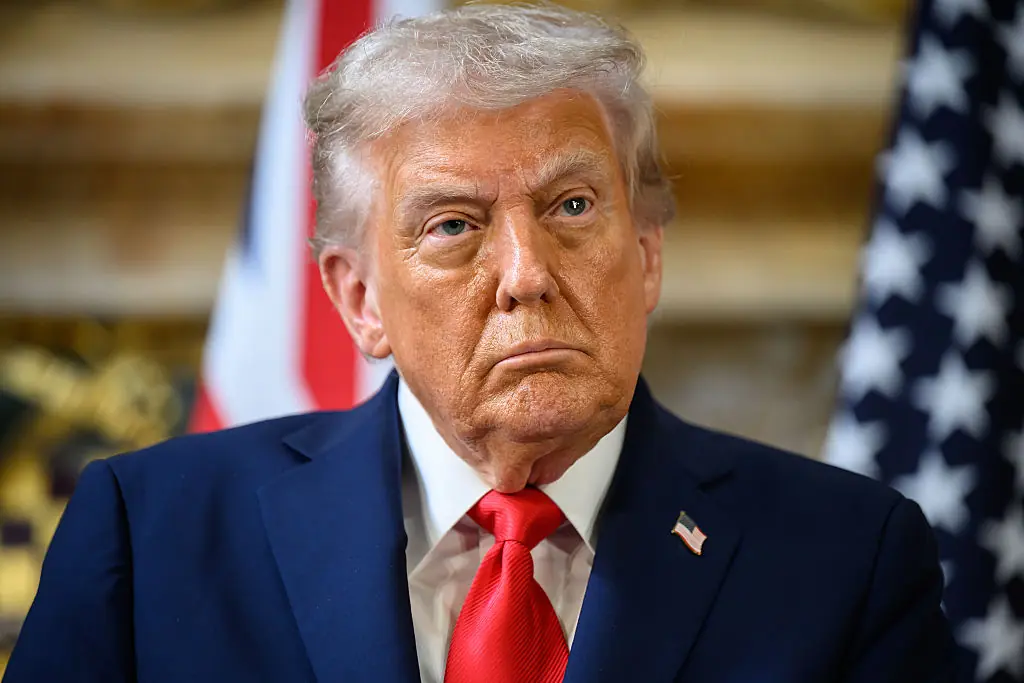
President Donald Trump has revived discussions about issuing a fourth financial payout, this time framing it as a $2,000 “tariff dividend,” funded entirely from revenue collected on imported goods. While online chatter fueled excitement, Americans hoping for a payment before the year ends are likely to be disappointed.
On November 17, 2025, Trump clarified that the payout would primarily target “moderate-income individuals,” with distributions expected in 2026, ahead of the midterm elections.
“We’ve brought in hundreds of millions through tariff collections,” Trump said. “We’re going to distribute dividends later—thousands of dollars for middle- and moderate-income earners.”
He also explained that a portion of the tariff revenue would go toward reducing the $37 trillion national debt, with the remainder allocated for eligible Americans.
Yet he confirmed unequivocally that no checks would be sent out in 2025:
“No, no. Not this year. It’ll be sometime next year.”
What Is a Tariff Dividend?
Unlike previous stimulus payments funded by the federal budget, this proposed dividend would come directly from money collected through tariffs on imported goods.
Economists, however, remain skeptical about the feasibility. Erica York of the Tax Foundation noted on X:
“If eligibility caps at $100,000, around 150 million adults could qualify. That would cost nearly $300 billion. So far, only $120 billion has been raised from the new tariffs.”
By September 30, 2025, total tariff revenue stood at $195 billion—well below what would be needed for a $2,000 payout to all qualifying adults. Officials argue that future collections, projected to exceed $3 trillion over the next decade, could eventually fund the program.
Who Could Qualify?
Trump has indicated the payout would exclude high-income earners and focus on lower- and middle-income Americans. Rough estimates:
.jpg_9MdBvK?tr=cr-0.0.1024.768,f-webp,q-75)
Lower-income households: Less than $55,820 annually
Middle-income households: $55,820–$167,460 annually
Higher-income households: Above $167,460 annually
By comparison, previous pandemic-era stimulus checks offered full payments to individuals earning up to $75,000 and couples earning up to $150,000, with gradual reductions for higher earners.
Earlier Attempts
This is not Trump’s first unconventional financial proposal:
July 2025: Trump floated “tariff rebate checks,” later included in the American Worker Rebate Act proposed by Sen. Josh Hawley, suggesting family payouts from $600 to $2,400. The legislation remains unpassed.
February 2025: Trump proposed a $5,000 “DOGE dividend,” tied to savings from government efficiency reforms spearheaded by Elon Musk, though details were unclear.
Income and Geographic Considerations
Income thresholds vary widely across the U.S.
Highest-income states: Massachusetts, New Jersey, Maryland, New Hampshire, California (median incomes over $95,000)
Lowest-income states: Arkansas, Louisiana, West Virginia, Mississippi (median incomes under $60,000)
High-income cities: San Jose, CA; Arlington, VA (median incomes above $136,000)
Low-income cities: Detroit, MI; Cleveland, OH (median incomes under $40,000)
Bottom Line: No 2025 Check
Despite circulating rumors, neither Congress nor the IRS has confirmed any immediate payment. Americans are advised to be cautious and skeptical of early claims to avoid misinformation or scams.
Trump himself was clear: the proposed $2,000 tariff dividend will not be distributed in 2025. If approved, any payout would likely occur in 2026.
✅ Conclusion
The $2,000 tariff dividend has generated widespread attention, fueled by social media speculation and political chatter. Yet the reality is far less immediate: revenue numbers don’t yet support such a large-scale payment, congressional approval is uncertain, and the president has confirmed that no checks will arrive this year.
For now, the proposal should be seen as a developing political promise rather than a guaranteed payout. Americans hoping for a new stimulus should temper expectations and approach the rumors with caution, especially as election-year strategies continue to unfold.