
Michael Reagan: A Life Between Legacy and Truth
Behind the bright spotlight of political fame, some lives unfold quietly in shadows. Michael Reagan’s story was never just about being Ronald Reagan’s son—it was about negotiating identity, grappling with loss, and navigating the subtle fractures that fame can magnify. His death at 80 prompts reflection on a life spent balancing the weight of legacy with the pursuit of personal truth.
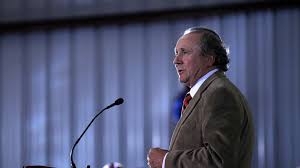
Michael Reagan’s life navigated the delicate space between public prominence and private uncertainty. Adopted into one of America’s most famous political families, he carried the Reagan name, yet not always the sense of belonging it seemed to promise. His identity was shaped less by inheritance than by discovery and introspection. Learning of his adoption from his sister, rather than his parents, created an early gap in understanding and fostered a sense of emotional distance that would quietly echo through his life.
As Ronald Reagan’s political career soared—from California governor to U.S. president—Michael often experienced family life through the lens of absence rather than presence. Moments of childhood and adolescence, ordinary in most families, were punctuated by separation, leaving him to navigate questions of selfhood without the constant reassurance of paternal guidance. Those early years were defined less by malice than by distance—a series of small, quiet absences that accumulated as history unfolded.
Michael neither idolized nor rebelled against his father. Instead, he chose a path of measured honesty: honoring his father’s accomplishments while acknowledging the emotional complexities of their relationship. Grief, respect, and occasional disappointment coexisted in a bond defined by nuance rather than drama. He once reflected that loving a parent in the public eye required balancing admiration with realism, a task made more complex by the constant scrutiny of the media and public opinion.
Beyond his familial identity, Michael Reagan demonstrated remarkable courage in confronting personal trauma. He revealed that he had been s*xually abused as a child, sharing this truth quietly and without sensationalism. In an era when male survivors—especially within conservative circles—seldom spoke out, his candor was an act of profound bravery. He framed his experience not as accusation but as a step toward clarity, understanding, and healing, providing a voice for those who often remain unheard.
Faith became central to Michael’s sense of resilience. Describing himself as “twice adopted,” he sought to integrate pain and personal history without letting it define him. Forgiveness, for him, was a means of survival and inner peace, rather than an erasure of past wounds. Professionally, as a commentator and radio host, he defended his father’s legacy with intellectual rigor while resisting oversimplification. He humanized the Reagan name, speaking openly about its triumphs and imperfections, while claiming authorship of his own narrative—a rare balance in a life so entwined with public history.
In private and public spheres alike, Michael Reagan exemplified integrity. He demonstrated that speaking truthfully, even when it intersects with power, fame, or societal expectations, is a form of courage in its own right. His life reminds us that the stories of those in historic families are not merely defined by the accomplishments of their relatives but also by the quiet acts of honesty, reflection, and resilience that shape their individuality.
Conclusion
Michael Reagan’s passing at 80 invites reflection on the complex intersections of legacy, personal struggle, and public scrutiny. He lived between history and individuality, navigating grief, distance, and trauma with honesty and grace. His story shows that courage is not only found on the public stage but also in the quiet assertion of one’s truth, the careful forging of identity, and the unwavering commitment to personal integrity—even under the shadow of monumental fame. In remembering him, we see a life defined as much by resilience and self-discovery as by the name he carried.