
The can had been sitting on the shelf for years, untouched and unquestioned.
Its bold blue label felt as ordinary as a hammer or screwdriver—nothing about it hinted at a hidden story. But when someone casually asked what WD-40 actually meant, the room went quiet. No one knew. For something so common, the name concealed an answer most people had never stopped to consider.
A Familiar Spray Sparks Curiosity
I was standing in the garage, wrestling with a rusted garden hose fitting, when I reached for the familiar blue-and-yellow can. A quick spray, a twist—and the metal loosened instantly. That’s when the thought hit me: I’d been using WD-40 for as long as I could remember, yet I had no idea what the name stood for.
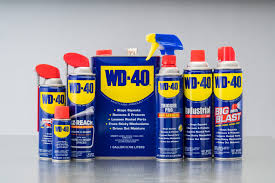
We say it automatically—“Just use WD-40”—the same way we say “restart it” or “grab a wrench.” It’s embedded in everyday problem-solving language. But the meaning behind the name? That question sent me digging.
A Product Born in the Cold War
The answer turned out to be far more interesting than expected.
WD-40 was created in 1953 by chemist Norm Larsen at a small company called Rocket Chemical. The goal wasn’t household convenience—it was national defense. During the Cold War, the company was tasked with developing a compound that could protect missile components from corrosion.
Their focus was simple but stubbornly difficult: create a substance that could displace water and prevent rust. Larsen and his team tried again and again—39 failed attempts—until the formula finally worked on the 40th try.
The name wasn’t marketing genius or a catchy acronym. It was literal: WD stands for Water Displacement, and 40 marks the successful formula number.
A Mystery Hiding in Plain Sight
Despite its near-universal presence, most people never learn this. In 2015, journalist David Muir asked Twitter users if they knew what WD-40 stood for. The responses ranged from sincere guesses to pure comedy—“Window Degreaser,” “Weird Duck,” and more.
Many admitted they had no idea. Others answered confidently—sometimes only after a quick online search. The takeaway was clear: the mystery had quietly fooled generations.
From Missiles to Everyday Fixes
Once the formula proved effective, Rocket Chemical began selling it beyond military applications. People quickly discovered its versatility. Stuck bolts, squeaky hinges, rusted tools, stubborn zippers—WD-40 seemed to solve problems no one else could.
I’ve used it on frozen grill screws, sticky scissors, and even to remove gum from carpet. My husband treats it like a universal remedy. Eventually, the company dropped “Rocket” from its name entirely, becoming the WD-40 Company—a business built around a single, surprisingly powerful product.
The Power of Persistence
What makes the story memorable isn’t just the product—it’s the process behind it. Forty attempts isn’t luck. It’s refusal to quit.
Now, every time I spray WD-40 on a squeaky hinge or a bike chain, I think about those 39 failures that came first. It’s a quiet reminder that success often arrives just after the moment when giving up feels most tempting.
Conclusion
WD-40 isn’t just a household shortcut—it’s a lesson in persistence, experimentation, and unexpected success. What began as a Cold War solution for missile corrosion became one of the most trusted tools in garages around the world.
And now that you know what the name really means, you’ll never look at that blue-and-yellow can quite the same way again.