
Long before the news became public, whispers circulated among conservationists that a pioneering figure in wildlife research might soon pass.
Colleagues and admirers feared the loss of not merely a scientist, but a quiet force whose work forever transformed humanity’s view of one of the planet’s most majestic creatures.
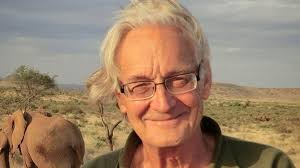
The environmental community is now mourning Iain Douglas-Hamilton, whose lifelong dedication to African elephants reshaped both science and public perception.
For over six decades, he studied these intelligent and socially complex animals, revealing their emotional depth, familial bonds, and sophisticated communication. His work went far beyond academic insight; it ignited global awareness and inspired generations to recognize elephants as sentient beings deserving protection. As news of his passing spreads, tributes pour in from conservationists, policymakers, and wildlife advocates worldwide, all acknowledging the enduring impact of his contributions.
Douglas-Hamilton’s groundbreaking career began in East Africa, where a simple yet revolutionary insight altered elephant research forever: he treated each elephant as an individual. By noting distinctive features—ears, tusks, behaviors—he documented personal stories, the matriarchal structures guiding herds, and the relationships sustaining them.
This approach exposed the devastating effects of poaching and provided critical evidence in international debates on the ivory trade, ultimately contributing to the landmark 1989 global ban on ivory sales—a turning point for elephant conservation.
Determined to advance protection efforts further, he founded one of the world’s leading elephant conservation organizations. Long before GPS tracking became commonplace, Douglas-Hamilton pioneered satellite collars to monitor elephants’ migrations across vast African landscapes.
His research revealed not only the incredible distances elephants travel for food and water, but also how human development disrupted these routes. These insights informed conservation strategies, supported communities living alongside wildlife, and shaped international policies aimed at reducing ivory demand. Through scientific innovation and tireless advocacy, he became a trusted voice in global wildlife protection.
Despite his worldwide influence, Douglas-Hamilton often emphasized a simple principle: coexistence between humans and wildlife. He championed empathy, education, and responsible stewardship of the natural world. He is survived by his wife, Oria, their daughters Saba and Dudu, and six grandchildren—but his true legacy extends far beyond family. It lives on in every elephant safeguarded, every conservationist inspired, and every initiative aimed at protecting wildlife for generations to come.
Conclusion
Iain Douglas-Hamilton’s life exemplifies the power of passion, perseverance, and empathy. Through decades of research, advocacy, and innovation, he transformed not only scientific understanding of elephants but also global attitudes toward wildlife. His legacy endures in protected landscapes, thriving elephant populations, and the countless individuals inspired to carry forward his vision of a world where humans and animals coexist in harmony.