
Could Americans really see a $2,000 check hit their bank accounts thanks to tariffs?
The idea is appealing, but the reality is far more complicated. From legal questions to congressional approval and uncertain timelines, the path from proposal to payment is tangled. While the administration has promised financial relief for working families, there is no guarantee the funds will ever arrive.
The Proposal Emerges
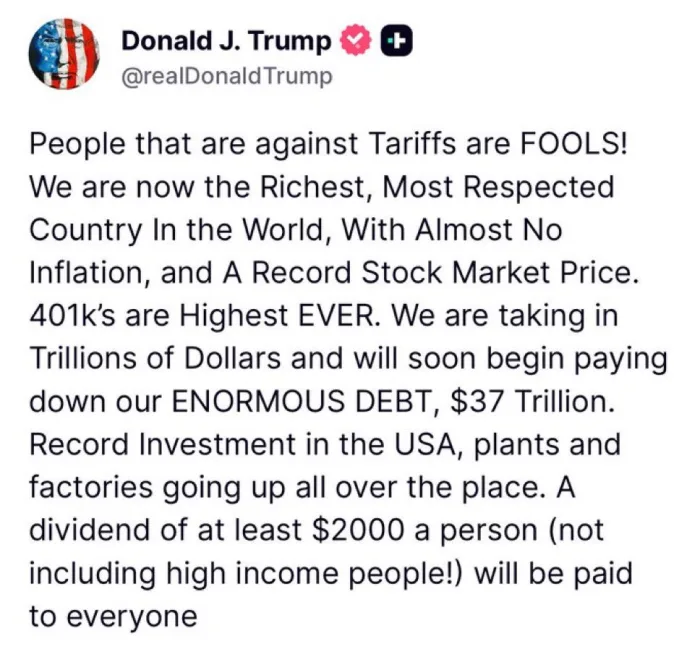
The conversation around a potential $2,000 “tariff dividend” began on Nov. 9, when President Trump announced on Truth Social that most Americans—excluding high earners—might receive payments sourced from tariff revenue. He cited strong economic performance, rising markets, and increasing tariff collections as justification.
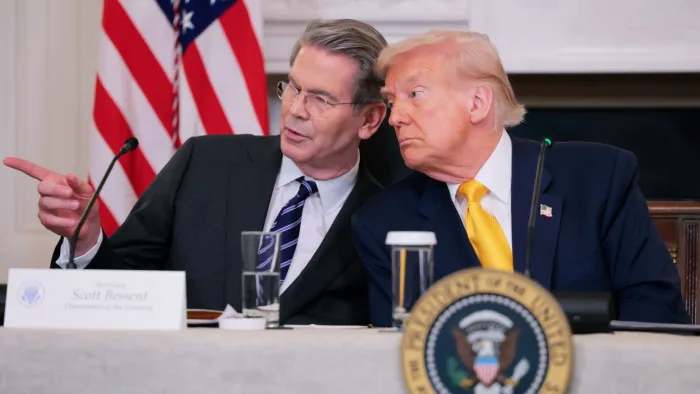
A week later, Treasury official Bessent appeared on Fox News’ Sunday Morning Futures to clarify the plan. He emphasized that Congress must approve the spending before any rebates, checks, or tax credits can be issued.
“These payments could go out,” Bessent explained, “but only with congressional approval.” Lawmakers would also determine eligibility criteria and the exact structure of the payout.
A History of Tariff-Linked Rebates
This is not the first time Trump has floated the idea of distributing tariff revenue to Americans. Earlier this year, he suggested prioritizing debt reduction, and later pointed to potential savings through the Department of Government Efficiency (DOGE), which claims to cut billions from government spending.
Independent estimates from the nonpartisan Committee for a Responsible Federal Budget indicate that a CARES Act–style rebate of $2,000 per household could cost up to $600 billion—far exceeding the roughly $100 billion in tariffs collected through October.
Adding to the uncertainty, the Supreme Court is reviewing whether Trump’s tariff system is constitutional. A ruling against the administration could result in billions being refunded to businesses and individuals.

Administration Statements
Despite the hurdles, Trump has continued to promote the proposal. On Nov. 9, he promised “at least $2,000” for every non-high-income household, pointing to strong markets and rising revenue. He repeated the promise in the Oval Office on Nov. 10, noting that excess funds would go toward reducing the national debt.
White House Press Secretary Karoline Leavitt also stated that officials are exploring “every legal option” to make the payments feasible.
How Payments Might Work
Bessent indicated that the initial rollout might not involve direct checks. Early benefits could come in the form of tax reductions—covering tips, overtime, Social Security income, or deductions for car loans—before potentially moving toward direct payments.
Other policy initiatives are also in discussion, including larger tax refunds in early 2026 and a $1,000 “birth investment account” for children born that year, with applications opening in July.
Who Would Qualify?
Eligibility for the rebate remains undefined. Trump has not set clear income thresholds for “high earners.” Analysts modeling a CARES Act–style approach suggest that full benefits might reach individuals earning up to $75,000 and couples up to $150,000, consistent with 2020 stimulus standards.
However, Congress is the ultimate gatekeeper. No legislation authorizing $2,000 tariff checks has been introduced. A smaller $600-per-person rebate proposed by Sen. Josh Hawley in July has also stalled.
Meanwhile, DOGE remains far from its $2 trillion savings target, having reported only about $214 billion in reductions as of Nov. 17—far short of what would be needed to fund widespread rebates.
Bottom Line
Until Congress approves the plan, the Supreme Court rules on the tariffs, and a financing mechanism is finalized, Americans should not expect $2,000 payments in their accounts. While the administration maintains that the idea is active, no timeline exists for distribution, and many legal and logistical questions remain.
Conclusion
Trump’s $2,000 tariff dividend is still a proposal rather than a reality. Despite promises of assistance for working families, significant legal, legislative, and financial hurdles leave the plan uncertain. For now, Americans can watch the story unfold—but should remain cautious about expecting immediate cash in hand.