
Trump Signals Potential Marijuana Policy Shift
When a president hints at a major policy reversal, it draws attention—and Donald Trump’s recent comments about potentially reclassifying marijuana are no exception. Political analysts, industry stakeholders, and the public are now questioning whether this signals a genuine policy shift or a strategic move designed for maximum political impact.
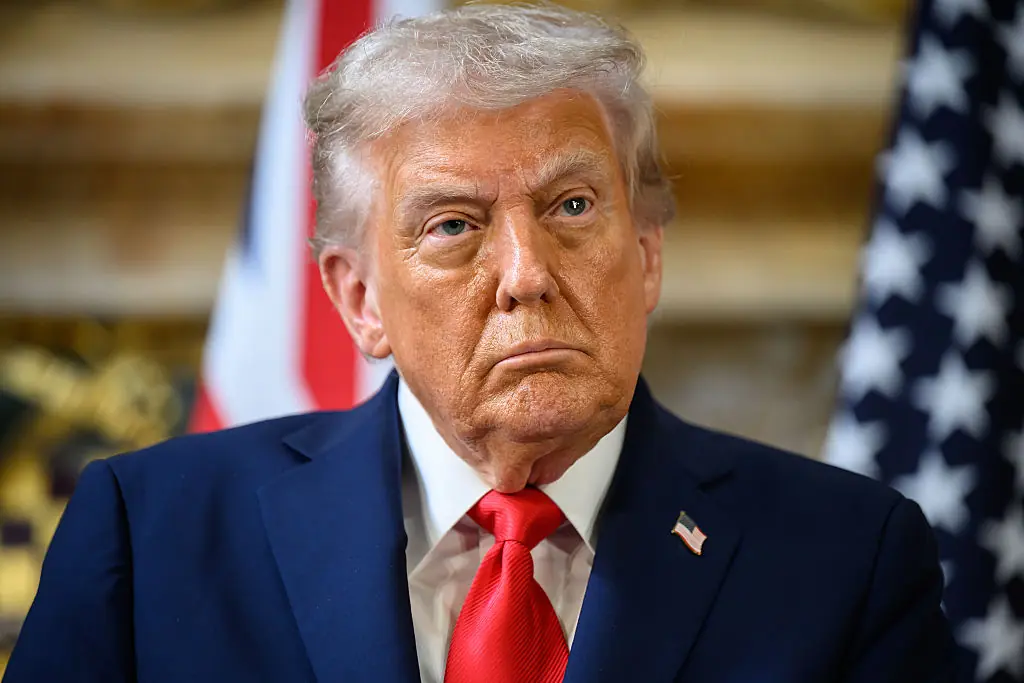
Trump Confirms Review
Donald Trump confirmed that his administration is “examining” the possibility of reclassifying marijuana, a move that could significantly alter the federal government’s approach to the substance.
During a press conference, Trump said officials are considering lowering marijuana’s classification as a dangerous drug. He emphasized that the process is in its early stages but hopes a decision will be made in the coming weeks.
“We’re reviewing reclassification, and a determination will be made—over the next few weeks, I would say—and hopefully it will be the right one. It’s a very complex issue,” Trump explained.
Why Reclassify Marijuana?
The announcement followed a high-profile $1 million-per-person fundraiser attended by prominent figures in the cannabis industry, including Kim Rivers, CEO of Trulieve, along with executives from Pfizer and the cryptocurrency sector.
Marijuana industry lobbyists have long pushed for federal regulatory change, hoping to influence the president’s decision.

Currently, marijuana remains classified as a Schedule I drug under federal law, categorizing it as highly dangerous, addictive, and without accepted medical use.
This classification, established by the Controlled Substances Act of 1970, imposes strict federal restrictions even as 45 states have legalized marijuana for medical or recreational purposes.
Reclassifying marijuana to Schedule III—a step previously considered under the Biden administration in 2024—would not legalize recreational use at the federal level. However, it could reduce criminal penalties, expand research opportunities, and provide tax advantages for cannabis businesses. It might also encourage greater involvement from pharmaceutical companies in states where marijuana is legal.
Trump acknowledged the complexity of the issue. “I’ve heard positive things regarding medical use and negative things about other aspects,” he said. He also noted that public opinion is divided: “Some people support it, some people oppose it. Some dislike marijuana entirely.”
Biden’s Prior Efforts
This is not the first federal attempt to reclassify marijuana. In 2022, then-President Joe Biden directed the Department of Health and Human Services and the DEA to review marijuana’s classification. By 2023, Health and Human Services recommended moving marijuana to Schedule III, and the DEA proposed a rule change. However, as of March 2025, that adjustment remains pending.
For Trump, reclassification would represent a major shift in federal policy, though he has stressed that recreational marijuana would remain illegal. While previously expressing reservations about cannabis, Trump has also acknowledged its cultural significance. In 2024, he publicly supported a Florida amendment to legalize marijuana, though the initiative ultimately failed.
Conclusion
Trump’s consideration of reclassifying marijuana highlights the growing tension between federal law and state legalization trends. While reclassification would not legalize recreational use, it could ease research restrictions, reduce criminal penalties, and expand the economic footprint of the cannabis industry. The decision remains politically sensitive and under intense scrutiny, leaving observers to wonder whether this marks the start of meaningful change or remains primarily a political signal.