
Beneath the fractured governance of Port-au-Prince, criminal networks have steadily expanded their reach, and U.S. officials now argue that some members of Haiti’s political leadership are enabling that rise rather than resisting it.
Washington’s latest move against a senior Haitian official points to a widening confrontation between international pressure and a state struggling to assert control as gangs dominate much of the capital.
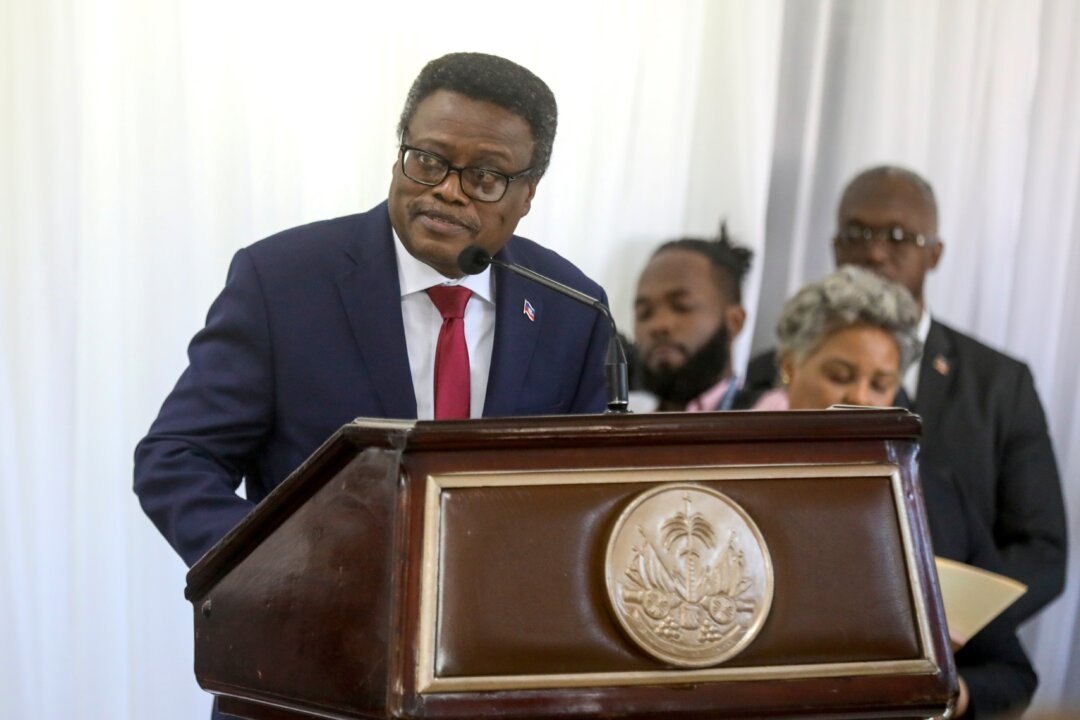
On November 24, the U.S. State Department announced visa restrictions against a Haitian government figure accused of facilitating gang activity and undermining efforts to dismantle organized criminal groups.
The action was taken under U.S. immigration laws that deny entry to individuals whose conduct threatens American foreign policy interests.
The restrictions fall under a sanctions framework launched in October 2022, which targets individuals—and in some cases their immediate family members—who provide financial, logistical, or material support to gangs operating in Haiti. Any existing U.S. visas held by the sanctioned official were also revoked.
In a statement, the State Department reaffirmed its position, saying the United States remains committed to Haiti’s stability and expects concrete progress toward democratic elections. It added that Haitians have suffered prolonged violence, institutional collapse, and political dysfunction, and warned that those contributing to instability would be held accountable by the Trump administration.
Fritz Alphonse Jean, a member of Haiti’s transitional presidential council, later confirmed that he was the official targeted by the sanctions.
The council was formed in 2024 following the resignation of former Prime Minister Ariel Henry, whose departure came amid escalating gang violence that effectively paralyzed state institutions.
Jean rejected the allegations, stating that members of the transitional council have faced sustained pressure from international partners, including threats of visa cancellations and sanctions from U.S. and Canadian diplomatic officials. The Canadian Embassy did not respond to media inquiries regarding the claim.
Haiti is expected to hold elections by February 7, when the nine-member transitional council is scheduled to step aside. Jean insisted that the council remains focused on dismantling corruption, resisting state capture, and confronting networks involved in drug trafficking and weapons smuggling.
The country’s instability has deepened since the assassination of President Jovenel Moïse in 2021, which accelerated the collapse of political authority and public security. According to the United Nations, more than 1.4 million people have been displaced internally. Carlos Ruiz Massieu, head of the U.N. mission in Haiti, has described the human rights situation as dire, citing widespread abuses linked to gangs, self-defense groups, and security operations.
International efforts to restore order have struggled. A multinational security support mission led by Kenya and approved by the U.N. Security Council in October 2023 faced persistent funding shortages and staffing limitations, allowing gangs to retain control over large portions of Port-au-Prince.
In September, that mission was replaced by the Gang Suppression Force (GSF), a 5,550-member multinational deployment with a one-year mandate to dismantle gang structures, secure key infrastructure, and enable humanitarian access. Secretary of State Marco Rubio said the force would evolve into a broader international burden-sharing arrangement with sufficient resources to confront armed groups effectively.
“The Security Council is delivering a clear message,” Rubio said. “Those who profit from instability in Haiti will no longer operate without consequences.”
Security conditions on the ground continue to deteriorate. On November 24, the U.S. Embassy in Port-au-Prince issued a security alert citing escalating gang violence. Sunrise Airlines suspended operations after one of its aircraft was struck by gunfire, while major highways linking the capital to surrounding regions became increasingly impassable.
The embassy warned U.S. citizens to expect disruptions to ports, airports, and roadways, along with shortages of fuel, food, and water. Americans still in the country were advised to shelter in place. Earlier in the month, U.S. Marines assigned to embassy protection briefly exchanged fire with suspected gang members.
United Nations figures indicate that more than 5,600 people were killed in Haiti in 2024, with violence spreading beyond traditional hotspots. Armed groups are estimated to control nearly 90 percent of Port-au-Prince.
In response to the worsening crisis, the United States pledged an additional $60 million in humanitarian and security assistance in July, raising total U.S. aid to Haiti in 2025 to $165 million, according to U.N. Ambassador Linda Thomas-Greenfield.
Conclusion
The U.S. decision to impose visa restrictions on a senior Haitian official reflects growing international frustration with the entanglement of politics and organized crime in Haiti. While Washington frames the move as a step toward accountability, the country remains trapped in a complex crisis marked by violence, displacement, and weakened institutions. As elections approach and gangs maintain control over much of the capital, Haiti’s future will depend not only on sanctions and security forces, but on sustained political reform and coordinated international support aimed at restoring legitimate governance.