
Aging is something many people quietly fear.
No matter how much we joke about getting older, most of us still have moments where we look in the mirror and wonder where all the years went. Modern society doesn’t really help either. Everywhere we look, we’re told to stay young, look younger, act younger, and somehow avoid aging at all costs.
The world praises youth constantly while treating old age like something to hide from.
But thousands of years ago, long before anti aging creams and retirement plans existed, a Chinese philosopher named Confucius had a very different view of growing older.
To him, aging was not a slow decline.
It was the reward for a life lived with wisdom, discipline, kindness, and purpose.
Confucius believed life was a continuous process of becoming a better human being. In his eyes, the later years of life were not about fading away from the world, but finally arriving at a deeper understanding of it.
Instead of fearing old age, he believed people should prepare for it spiritually and emotionally throughout their entire lives.
And honestly, some of his ideas feel even more relevant today than ever before.
Confucius believed old age should bring peace, not fear
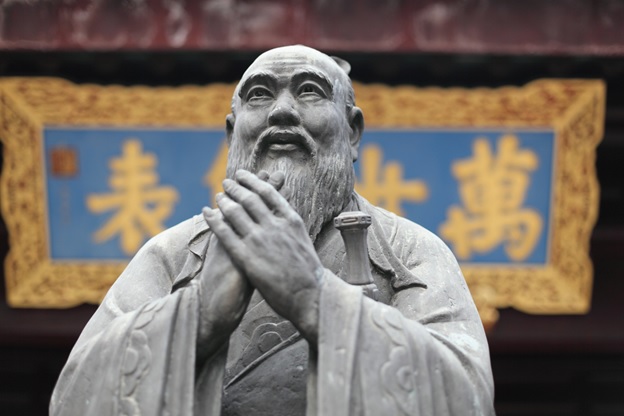
Confucius lived during a chaotic period in Chinese history filled with political disorder and social instability. But instead of searching for answers in wealth or power, he focused on human character.
He taught that happiness comes from self cultivation, learning, discipline, compassion, and meaningful relationships.
One of his most famous quotes perfectly captures how he viewed aging:
“At fifteen, I set my heart on learning. At thirty, I stood firm. At forty, I had no doubts. At fifty, I understood Heaven’s will. At sixty, my ear became attuned to truth. At seventy, I could follow my heart without doing wrong.”
That quote completely flips modern fears about aging upside down.
Confucius didn’t see youth as the peak of life. According to him, true peace and freedom came much later, after decades of learning and growth.
For him, reaching old age wasn’t something tragic.
It was the final stage of becoming the person you were meant to be.
Here are four important lessons from Confucius that can help people live happier and more meaningful later years.
1. True dignity comes from character, not status

One of the biggest struggles people face after retirement is losing the identity they built around work, titles, money, or achievements.
Many spend decades feeling valuable because of what they produce.
But eventually careers end, appearances change, and social status fades.
Confucius believed real dignity has nothing to do with those things.
According to his teachings, dignity comes from internal character. It’s built through honesty, discipline, integrity, and the way someone treats others when nobody is watching.
That’s why some older people radiate peace even without wealth or prestige, while others remain bitter despite having everything materially.
Confucius believed a person should constantly work on refining themselves morally throughout life. By the time old age arrives, their sense of worth should no longer depend on outside validation.
A peaceful old age begins with being able to respect the person staring back at you in the mirror.
Not because of success.
But because of character.
2. Stop fighting time and learn to live in the present

One of the biggest reasons people struggle emotionally as they age is their relationship with time.
Some become trapped in nostalgia, constantly mourning their younger years. Others become anxious about the future and fear what’s still to come.
Confucius encouraged a completely different mindset.
He believed every stage of life carries its own purpose and beauty.
Instead of resisting aging, people should learn to move alongside time rather than against it.
Living in the present was deeply important in Confucian philosophy. Not in a reckless “live fast” kind of way, but through appreciating ordinary moments fully.
Simple routines mattered.
Sharing tea.
Watching the sunrise.
Having meaningful conversations.
Walking quietly through daily life with awareness.
Confucius believed real peace comes from learning to fully inhabit the current season of life instead of constantly trying to relive another one.
When people spend less energy grieving the past or fearing the future, old age becomes much lighter emotionally.
3. Relationships are the real measure of wealth

Modern culture often treats retirement like a financial equation.
Save enough money and supposedly everything else works itself out.
But Confucius believed human relationships are the true wealth people depend on later in life.
His philosophy focused heavily on family, friendship, respect, and community. He believed humans are not meant to live isolated from one another.
And honestly, one of the saddest realities of modern aging is loneliness.
Many people spend their middle years chasing careers while unintentionally neglecting deeper emotional connections. Then retirement arrives and suddenly the silence feels unbearable.
Confucius warned against this kind of imbalance long ago.
He taught that meaningful relationships require consistent care throughout life. Being present for family, nurturing friendships, mentoring younger people, and participating in community all become emotional investments that matter deeply later on.
In old age, what people usually remember most isn’t possessions.
It’s conversations.
Shared meals.
Laughter.
The feeling of being loved and remembered by others.
According to Confucius, a truly virtuous person is never completely alone because kindness naturally draws people closer over time.
4. The final stage of life is about giving wisdom away

Many people enter old age feeling lost because they believe their “important years” are behind them.
Confucius strongly disagreed with that idea.
He believed the later years of life carry one of the most meaningful responsibilities of all: guiding the next generation.
In Confucian thought, older people become teachers, mentors, storytellers, and moral examples for younger generations.
Their purpose shifts from building a life to passing wisdom forward.
That sense of purpose matters enormously.
People who feel they still have something meaningful to contribute often age with far greater emotional resilience and peace.
Legacy, according to Confucius, isn’t about fame or money.
It’s about what you leave behind in people’s hearts.
The values you teach.
The comfort you provide.
The lessons others carry because of you.
Whether it’s teaching grandchildren, helping the community, mentoring younger people, or simply offering calm guidance during difficult moments, these acts create meaning that lasts far beyond one lifetime.
And maybe that’s one of the most beautiful ways to think about aging.
Not as disappearing from the world.
But as quietly helping shape the people who will continue after you.
In the end, Confucius saw growing older not as something to fear, but as something to earn.
A chance to finally live with clarity, wisdom, gratitude, and peace.
And honestly, that feels a lot healthier than spending life desperately trying not to age at all.