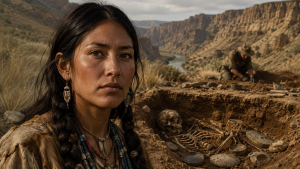
The 12,000-Year-Old Girl Found Deep Inside A Flooded Cave — And The DNA Discovery That Changed The Story Of The First Americans
This was not a new observation in the study of the earliest Americans.
For decades, researchers analyzing the skulls of the most ancient known human remains from the Americas — people who had lived more than ten thousand years ago — had noted that many of these ancient individuals showed cranial morphology that differed from that of later Native American populations.
Some of the oldest skulls from South America, from the Baja California coast, from various North American sites, showed features that some researchers described as more similar to populations from Southeast Asia or even, in the view of some analysts, from Sub-Saharan Africa, than to the populations that occupied the same regions in more recent times.
The meaning of this morphological difference had been debated intensely for decades, and it was a debate with genuine scientific substance as well as political and cultural dimensions.