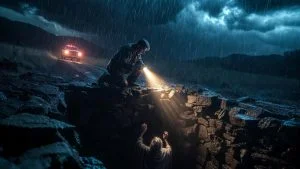
The 12,000-Year-Old Girl Found Deep Inside A Flooded Cave — And The DNA Discovery That Changed The Story Of The First Americans
This range is not a single precise number — radiocarbon dates always carry uncertainty, and the range reflects both the statistical uncertainty of the measurement and the additional uncertainty introduced by the calibration of radiocarbon dates to actual calendar years, which varies depending on the atmospheric carbon-14 levels at different periods in the past.
The date range places Naia’s death at the very end of the Pleistocene — the geological epoch that encompasses the last Ice Age — and at approximately the same broad period as the Clovis cultural horizon in North America and as various other well-dated early American archaeological contexts.
She was alive at a time when the Americas were still inhabited by the full range of Pleistocene megafauna, when the climate was shifting toward the warmer, wetter conditions of the Holocene, and when the human population of the hemisphere was in the early stages of the expansion and diversification that would eventually produce the many distinct cultures of the pre-Columbian Americas.
The Relationship Between Naia And Clovis