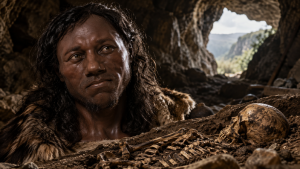
The 24,000-Year-Old Boy Buried With 120 Beads And A Mammoth-Ivory Tiara — And The DNA Test That Revealed A Hidden Source Of Native American Ancestry
He was placed under a stone with care.
He lived and died in the Last Glacial Maximum, in one of the most demanding environments on earth, in a community that created beauty out of ivory and bone and that invested substantial labor in marking the deaths of its members, including its youngest.
His genome, recovered from his bones 24,000 years after his death and compared against the genomes of populations alive today, told researchers something they had not known before: that the founding population of the Americas carried ancestry related to his population — an ancient Siberian lineage that had been invisible in previous models, that had been sitting as an unexplained residual in the statistics of population genetics, until a 24,000-year-old genome gave it a face and a location.
That revelation — the hidden source of Native American ancestry, the Ancient North Eurasian component identified through the Mal’ta genome — is the scientific legacy of the burial at Mal’ta.