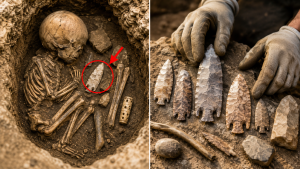
The 25,000-Year-Old Teeth That Just Rewrote The History Of Human Drug Use
But the Sulawesi study provides an empirical foundation for them that is richer and older than the evidence that existed before September 9, 2026.
Looking Forward: What Comes Next
The study published in Science Advances represents the beginning of a research program as much as the conclusion of one.
The questions it raises will drive future work in several directions.
First, the search for the diagnostic dental wear pattern in other ancient specimen collections.
Now that the pattern has been formally described and associated with betel nut use, it can be systematically searched for in skeletal collections from across Southeast Asia and the Pacific.
If it is found in other specimens, the geographic and temporal distribution of the ancient practice can be mapped more completely.