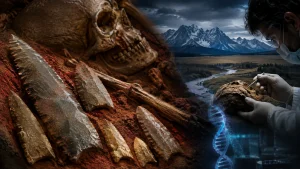
The 31,000-Year-Old Children’s Teeth Found Above The Arctic Circle — And The DNA Test That Revealed A Lost Ice Age Population Connected To Native American Origins
But enough of it survived, in enough of the molecule’s original structure, for modern sequencing technology to recover and reconstruct the genome.
The ice kept it for us.
Specifically, it kept it until a moment in human technological history when we could actually read what it contained.
The development of high-throughput sequencing technology, the computational methods for assembling ancient genomes from fragmented data, the population genetic tools for interpreting what ancient genomes mean in the context of human history — all of these came together in the early decades of the twenty-first century, precisely when the preserved specimens from sites like Yana were available for analysis.
The timing is remarkable in its own way: the biological material survived for 31,000 years in the permafrost, and the technology to read it was developed just in time.