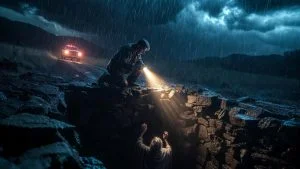
The 8,800-Year-Old Man Found 1,000 Feet Inside A Colorado Cave — And The DNA Test That Linked Him To A Native American Founder Lineage
It is worth spending additional time on how archaeologists can be confident that the Hourglass Cave man is really as old as the published dates suggest — because this confidence does not come automatically and the processes that produce it are interesting in their own right.
Radiocarbon dating, as explained earlier, produces a probability range rather than an exact date.
The range reflects the statistical uncertainty of the measurement — the natural variation in how carbon-14 decays, and the precision of the analytical method — combined with the additional uncertainty introduced by the calibration process that converts radiocarbon years to calendar years.
For the Hourglass Cave remains, the radiocarbon determinations fell in the range of approximately 7,714 to 8,170 radiocarbon years before present, depending on which specific samples and measurements are referenced.
When calibrated against the standard calibration curve for the relevant time period, these radiocarbon measurements correspond to calendar ages in the range of approximately 8,800 calibrated years before the present — the figure that has become the standard summary for the site’s age.