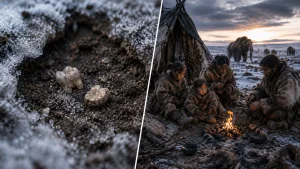
THE ANCIENT MAN BESIDE THE RIVER
It is a cultural catastrophe.
Salmon is not just food.
It is the center of ceremony, identity, and worldview.
The First Salmon Ceremony, practiced by many Columbia Plateau tribes, is one of the most important ritual occasions of the year — a formal acknowledgment of the relationship between the people and the fish that has sustained them since before memory.
When Kennewick Man was alive, the Columbia River ran freely.
Its salmon runs were intact.
The people beside the river lived in relationship with a system that was, by every measure, far more abundant than what exists today.
Eight thousand years later, the tribes who are his descendants are fighting — in courts, in legislatures, in public forums — to restore some measure of that abundance.
The debates about dam removal on the Lower Snake River, a major Columbia tributary, have become one of the most contentious environmental and political battles in the Pacific Northwest, pitting the economic interests of agriculture and hydroelectric power against the treaty rights of the Nez Perce and other Columbia Plateau tribes.
The ancient man beside the river connects to these living struggles.