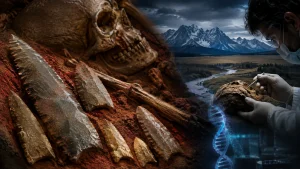
THE ANCIENT MAN BESIDE THE RIVER
His bones are in the ground, but the questions his story raised — about who belongs to this land, about what obligations we have to the living communities that have inhabited it for thousands of years, about how Indigenous rights are balanced against the demands of modern economy — are very much alive.
Every salmon that fails to return to its spawning ground in the Columbia River is connected, in some profound sense, to the same story.
Every tribal fisherman who casts a net on the Columbia is doing something their ancestors did thousands of years ago — living in relationship with a river that runs through the heart of their history.
And somewhere in the soil of the Pacific Northwest, in a location that is kept private and sacred, the bones of their ancestor rest in the earth.
He is home.
CLOSING MEDITATION: ON WHAT IT MEANS TO COME HOME
There is something that human beings across cultures share, across all the differences of language and religion and history and geography: a profound investment in how we treat our dead.
Every human culture that has ever existed has developed practices for handling the bodies of those who have died — practices that reflect the culture’s understanding of what a person is, what death means, and what obligations the living have toward those who have passed.
Burial, cremation, sky burial, water burial, scaffold burial, mummification — the specific forms vary enormously, but the investment in proper treatment of the dead is universal.
This is not superstition.