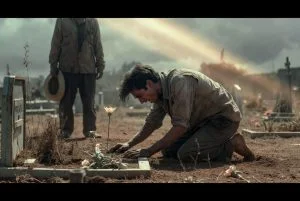
The Night The Lumbee Confronted A KKK Rally – And Sent The Klan Running
The Lumbee homeland included towns, farms, roads, churches, schools, and mixed communities.
That reality challenged outside assumptions about what Native America looked like in the twentieth century.
The Klan appears to have misunderstood this as well.
It treated Native identity as a racial category it could police.
The Lumbee treated identity as community and homeland.
Hayes Pond therefore became a territorial statement without being a formal territorial battle.
The message was social rather than governmental: outsiders could not enter the community and expect obedience simply because they carried the symbols of white supremacy.
The phrase “Indian Country” also connects the event to a broader Native American history of defending community space against outside control.
Hayes Pond was modern, local, and specific.
But the underlying assertion — we belong here, and you do not get to define us — reaches much deeper.