Your Masterpiece Lives On
When I held the hand of a dying man who had no one, I was not being a saint, whatever it might have looked like from outside.
I was giving my stranded love a destination.
I was taking the tenderness that had nowhere to land and letting it land on someone who needed it, and in doing so, I was easing, just slightly, the terrible pressure of love with no object.
It did not bring my mother back.
It did not fix the grief.
But it let the love flow again, out of me and into the world, instead of pooling inside me into pain, and that flowing was, itself, a kind of healing.
I did not know, doing it, that this same principle would govern the rest of the story, that Julian too was a man with love and nowhere to put it, forty-five years of a father’s love for a daughter he could not save, dammed up inside him with no object, and that he would find, in me and in the legacy he left, a place at last for that love to go.
We were, the two of us, more alike than either of us knew when we met: two people carrying love that had nowhere to land, looking, without quite knowing it, for somewhere to spend it.
We found it in each other.
And the finding healed us both.
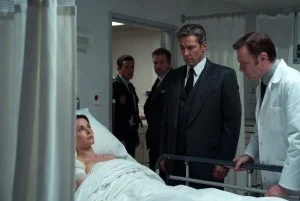
And it was in that work, in that year of sitting beside the dying, that a frail seventy-two-year-old man named Julian came into my life, and changed it in ways I could not possibly have imagined, in ways I would not fully understand until a lawyer placed a heavy green backpack in my hands and told me that my husband had not been who I thought he was.
Chapter 2 — Julian
Julian was dying of heart failure.
He was frail, and he always looked exhausted, worn thin by the long slow work of a heart giving out.