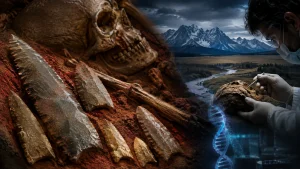
The 13,000-Year-Old Man Found On A California Island — And The Dating Test That Changed The Story Of America’s First Migration
The maritime knowledge that had brought them to the island in the first place — the ability to cross water, to navigate the channel — became progressively more essential as the island’s own internal landscape became more fragmented.
The sea-level rise also erased the evidence of the earliest occupations.
The terminal Pleistocene campsites and middens that would have been on the lowland margins of Santarosae — the places where early inhabitants built their fires and processed their food and buried their dead — are now underwater.
The Arlington Springs canyon, cut into higher ground, survived.
Most of what else happened on the ancient shore of Santarosae between 13,000 and 10,000 years ago is on the continental shelf, under water.
A Note On The Historical Chumash — And The Careful Bridge