
What happened here is being compared again and again to one of the worst building disasters in modern history, and for good reason.
The story behind it goes back decades, to Seoul and the collapse of the Sampoong Department Store, a tragedy that claimed over 500 lives and left a lasting warning for fast growing cities everywhere.
At the time, South Korea was going through rapid transformation. The country had moved from war devastation in the 1950s into a period of extreme economic growth and urban expansion.
Seoul especially was growing at a speed that many experts now say came with serious structural risks that were often ignored.
The Sampoong Department Store was meant to be a symbol of that progress. It was built in one of the wealthiest districts of Seoul and originally planned as a residential building. But during construction, the purpose kept changing. It was turned into a department store, then expanded again, and with each change, the structure was pushed beyond what it was originally designed to handle.
One of the biggest issues came when major support columns were altered to make space for escalators. Engineers had warned against it, but those concerns were not followed. Later, even more weight was added when the building design was modified again to include extra floors and heavy restaurant areas. Each decision added more stress to the structure.
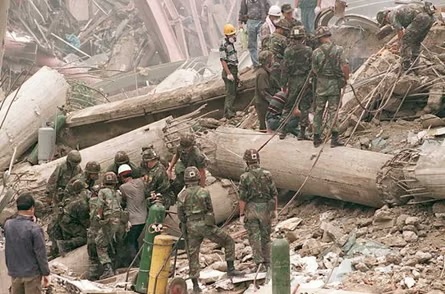
Things got worse when heavy air conditioning units were installed on the roof. They were not just placed there, they were moved across the roof surface, which caused cracks in the already weakened structure. Over time, those cracks only grew wider.
On the day of the collapse, warning signs were already visible. Cracks had spread through parts of the building and there was growing concern among staff. Some actions were taken, like turning off the air conditioning and closing the top floor, but the mall was not evacuated.
At around 5:52 in the evening, the situation reached its breaking point. The rooftop air conditioning units fell through, the support columns failed, and the entire structure came down while hundreds of people were still inside.
The collapse became one of the deadliest building failures in modern history. Investigations later pointed to a combination of design changes, ignored safety warnings, and decisions driven more by profit than engineering caution.
Today, the incident is still studied as a serious lesson in urban development. It is often cited as an example of what can go wrong when construction speed and commercial pressure are prioritized over structural safety.
Even years later, it remains a reminder that buildings are not just business projects. They are lives held up by engineering decisions, and when those decisions fail, the consequences can be irreversible.